
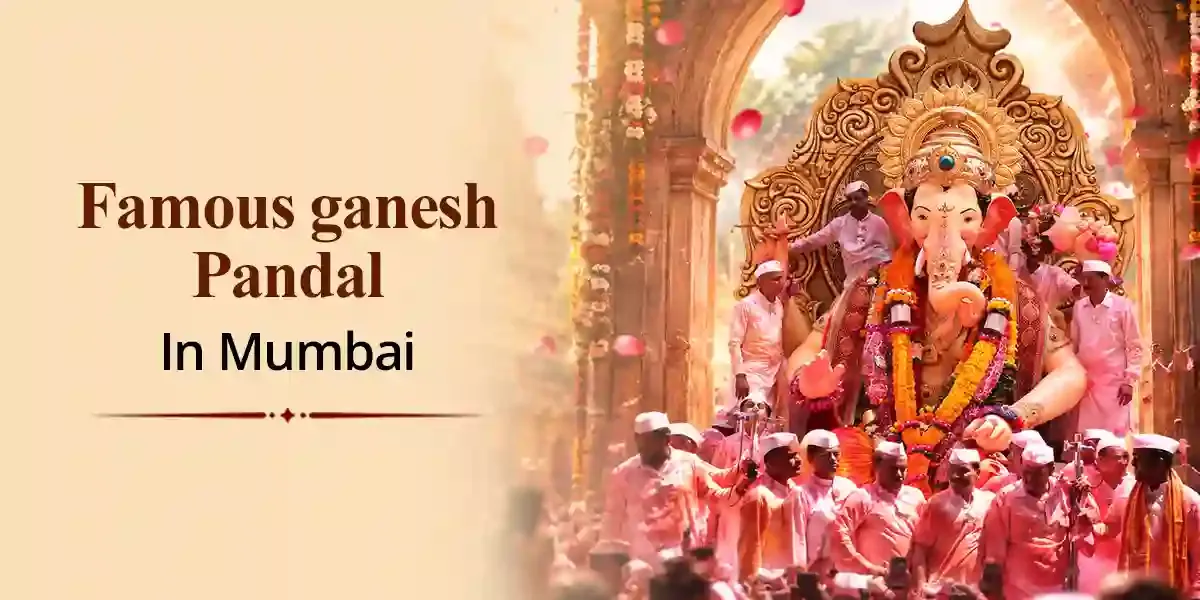

Famous Ganesh Pandals in Mumbai 2026: Top Ganpati Pandals
Mumbai Ganesh Puja turns the city into a hub of art, devotion, and culture every year. Here is a detailed rundown of the famous Ganpati pandals in Mumbai worth visiting, where they are, what their history is, and what makes each Ganpati pandal worth the trip.
The 2026 Ganeshotsav runs from Monday, September 14, to Friday, September 25 (Anant Chaturdashi).
Central Mumbai Pandals
1. Lalbaugcha Raja
The most iconic Ganpati pandal in Mumbai, run by the Lalbaugcha Raja Sarvajanik Ganeshotsav Mandal at Shree Ganesh Nagar on Dr Babasaheb Ambedkar Road, Parel.
Known across India as the Navsacha Raja, the wish-fulfilling form of Lord Ganesha. People travel from other states just to seek darshan here, treating the visit almost like a pilgrimage rather than a festival stop.
Two darshan types exist: Mukh Darshan, where only the face is visible, and Charan Sparsh, where devotees touch the feet. Charan Sparsh queues are brutal, often stretching 20 to 30 hours during peak days.
The idol's crown, jewelry, and painted backdrop change every single year, and these design choices get discussed and photographed across the country well before the festival even starts.
Beyond the darshan crowds, the mandal runs serious social work year-round, including health camps, blood donation drives, and educational support. 2026 marks its 93rd year of celebration, a milestone that adds extra weight to this edition.
2. Mumbaicha Raja (Ganesh Galli)
Sitting just a short walk from Lalbaugcha Raja, this mandal is credited with starting Mumbai's culture of building massive, theatrical thematic sets instead of simple decorated stages.
Past years have seen full-scale replicas of temples, palaces, and heritage monuments built around the idol, turning the pandal into something closer to an immersive stage set than a shrine.
The 2026 theme leans into the Warkari tradition and the Wari pilgrimage, recreating the visual world of that pilgrimage walk in full detail.
This is the pandal for anyone who cares about craftsmanship, lighting design, and sculpture, not just the darshan itself. Photography enthusiasts in particular tend to linger here longer than anywhere else on the Lalbaug circuit.
3. GSB Seva Mandal Ganpati (King's Circle)
Popularly nicknamed Mumbai's "Gold Ganpati," this pandal at Shree Sukrateendra Nagar is run by the Goud Saraswat Brahmin community and follows a noticeably different rhythm from other major mandals.
The eco-friendly clay idol of Lord Ganesha is decked in more than 66 kg of gold and 335 kg of silver ornaments, much of it donated by devotees over decades. The sheer weight of precious metal on display is genuinely one of a kind in the city.
Unlike ten-day celebrations elsewhere, GSB strictly runs a compact 5-day cycle. For 2026, that window falls from September 14 to 18, marking the mandal's 72nd year.
Rituals here lean heavily traditional and Vedic rather than theatrical. Expect tight security screening given the display value, so leave jewelry, expensive phones, and other valuables at home before entering.
4. Chinchpokli Cha Chintamani
Known for grand, creatively built sculptures of Lord Ganesha and an Aagman, or arrival procession, that pulls in lakhs of devotees on its own.
The energy during the Aagman is intense, with drumming, dancing, and crowd chanting that builds for hours before the idol even reaches the pandal.
The 2026 aesthetic draws heavily from the temple architecture of Tirupati Balaji, so expect gold-toned pillars, temple-style arches, and a heavier, more devotional set design than the neighboring pandals.
South Mumbai Pandals
5. Khetwadicha Ganraj (Girgaon)
Khetwadi is not one pandal but an entire neighborhood grid packed with competing Ganesh puja pandals, each lane running its own idol, theme, and fan base.
This particular mandal became a local legend after building one of India's tallest Ganesh idols back in 2000, and it has leaned into scale and spectacle ever since.
For 2026, the lanes split into distinct storylines. The 11th Lane channels the fierce Narasimha incarnation, while the 12th Lane shows Lord Ganesha enthroned, flanked by an assembly of smaller Lord Hanuman idols.
Walking the full Khetwadi stretch feels less like visiting one shrine and more like touring a mini exhibition, with every lane trying to outdo the next in scale and detail.
6. Girgaoncha Raja
Established back in 1938, this pandal has intentionally kept a community-driven, low-commercial feel even as neighboring areas leaned into bigger spectacle over the decades.
Eco-friendly practices are a point of pride here, and the mandal has stuck to a traditional clay idol rather than chasing flashy modern materials.
The 2026 idol stands around 25 feet tall, sculpted in a classic style that locals say has barely changed in spirit since the mandal's early years.
Since it sits right next to Charni Road station and close to the Khetwadi lanes, most visitors fold this stop into the same trip without much extra travel.
7. Fortcha Icchapurti Raja
Tucked near the General Post Office in Fort, this pandal carries a name that translates directly to wish-fulfillment, and devotees treat it that way.
It is smaller in scale compared to the Lalbaug giants, but its South Mumbai location makes it an easy, low-effort add-on for anyone already exploring the area.
Many visitors combine it with a heritage walk covering Colaba and the Gateway of India, turning a quick darshan stop into a half-day South Mumbai outing.
Western Suburbs
8. Andhericha Raja
The go-to Ganpati pandal for anyone based in the Western Suburbs, set up in Azad Nagar, Andheri West, far from the Lalbaug crush.
The 2026 theme rebuilds the Ram Mandir in Ayodhya in striking detail, giving the pandal a temple-town feel rather than a standard stage-and-idol setup.
Physically smaller than Lalbaugcha Raja, but locals hold it in almost equal regard when it comes to wish-fulfillment, and the crowd here feels more manageable while still being substantial.
Visiting a wish-fulfilling deity is also a natural moment to reflect on personal blockages. Explore remedies for clearing negative energy through the Vastu Dosha and Planetary Affliction Remedies guide on Astroyogi.
Eastern Suburbs
9. Sahyadri Krida Mandal (Chembur)
The main draw for anyone in the Eastern Suburbs or Navi Mumbai who does not want to cross the city for darshan.
2026 marks the mandal's 50th golden jubilee, and instead of leaning into an extra-grand traditional theme, they have gone with a full superhero concept.
This shift makes it noticeably more playful and kid-friendly than most other major pandals, which tend to stick with mythological or historical set pieces.
Quick Comparison Table
| Pandal | 2026 Theme | Nearest Transit Line | Core Vibe |
|---|---|---|---|
| Lalbaugcha Raja | Custom elegant backdrop | Central Line (Curry Road / Chinchpokli) | High energy, intense crowds |
| Mumbaicha Raja | Warkari & Wari pilgrimage | Central Line (Chinchpokli) | Artistic sets, photo-heavy |
| GSB Seva Mandal | Gold & silver adornments | Central Line (King's Circle) | Vedic rituals, tradition |
| Khetwadicha Ganraj | Narasimha & Hanuman | Western Line (Grant Road / Charni Road) | Multi-lane pandal hopping |
| Girgaoncha Raja | Traditional clay idol | Western Line (Charni Road) | Community, eco-friendly |
| Chinchpokli Cha Chintamani | Tirupati Balaji | Central Line (Chinchpokli) | Grand sculpture, big procession |
| Fortcha Icchapurti Raja | Wish-fulfillment theme | South Mumbai (near GPO) | Heritage walk stopover |
| Andhericha Raja | Ram Mandir replica | Western Line / Metro (Andheri) | Suburb access, wishes |
| Sahyadri Krida Mandal | Superhero jubilee | Eastern Express Highway / Chembur | Family-friendly |
Pandal-Hopping Routes
Lalbaug Epicentre (Foot route): Lalbaugcha Raja, Mumbaicha Raja, Chinchpokli Cha Chintamani. Move on foot, since roads are closed to autos and taxis during peak hours.
Heritage Circuit (South Mumbai): Western Line to Charni Road for Girgaoncha Raja and the Khetwadi lanes, then a taxi south to finish at Fortcha Icchapurti Raja.
Suburban Loop: Andhericha Raja in the west and Sahyadri Krida Mandal in Chembur are connected via the Eastern Express Highway or Metro.
Visiting Tips
Go on a weekday, before late afternoon.
Skip the first day, weekends, and the final immersion day.
Local trains plus walking beat cars and taxis in most zones.
Carry water, cash, and essential medicines.
Wear comfortable footwear.
Skip large bags, tripods, and extra electronics.
Follow police barricades and one-way routes.
Check the mandal's official social media on visit day for changes.
Pandal Etiquette
Dress modestly.
Remove footwear where required.
Do not touch the idol or offerings without permission.
Avoid photography where it is restricted.
Respect devotees praying or doing aarti.
Use designated waste bins.
Never push through a queue or ask for special treatment.
Bringing the Blessings Home
Watching the grandeur of public pandals is only half the festival experience for most devotees.
Setting up a home shrine for Lord Ganesha matters just as much as the public darshan, and many families treat it as the more personal half of the celebration. Learn how to perform Ganesh Chaturthi Puja at Home, including the puja vidhi, samagri, and important rituals.
Small details like the idol's trunk direction and color affect home harmony according to Vastu principles, so these choices are worth getting right before the big day.
Final Word
First-timers should start with Lalbaugcha Raja and Mumbaicha Raja, since both sit close together and cover the most iconic side of the festival.
For a neighborhood feel, try Khetwadi or Girgaoncha Raja instead of the biggest names.
For tradition and ritual over spectacle, go to GSB Seva Mandal.
Western suburb residents have Andhericha Raja close by, while eastern suburb residents can stick to Sahyadri Krida Mandal.
Always confirm dates and timings through official mandal channels or a local panchang before heading out to seek the blessings of Lord Ganesha.
Team Astroyogi is an experienced in-house editorial team of passionate writers, researchers, and astrology enthusiasts dedicated to making ancient divination sciences more accessible and meaningful in everyday life. With years of collective experience in creating insightful astrology and spirituality content, the team specializes in simplifying complex spiritual concepts into practical guidance for readers seeking clarity, balance, and personal growth. The Astroyogi editorial team possesses expertise across a wide range of subjects, including Indian Astrology, Vedic Astrology, Planetary Transits, Horoscope Analysis, Vastu Shastra, Numerology, Tarot, Spiritual Wellness, and Ritual Practices. Every piece of content is carefully researched, fact-checked, and crafted with the intention of offering reliable, insightful, and easy-to-understand guidance rooted in traditional wisdom. Driven by a commitment to authenticity and reader trust, Team Astroyogi strives to create content that empowers individuals to navigate life’s opportunities and challenges with confidence, positivity, and inner peace. Their mission is to bridge ancient astrological knowledge with modern-day relevance, helping readers make informed decisions and lead more harmonious lives.