
Navratri Vrat Katha: The Story of Sumati
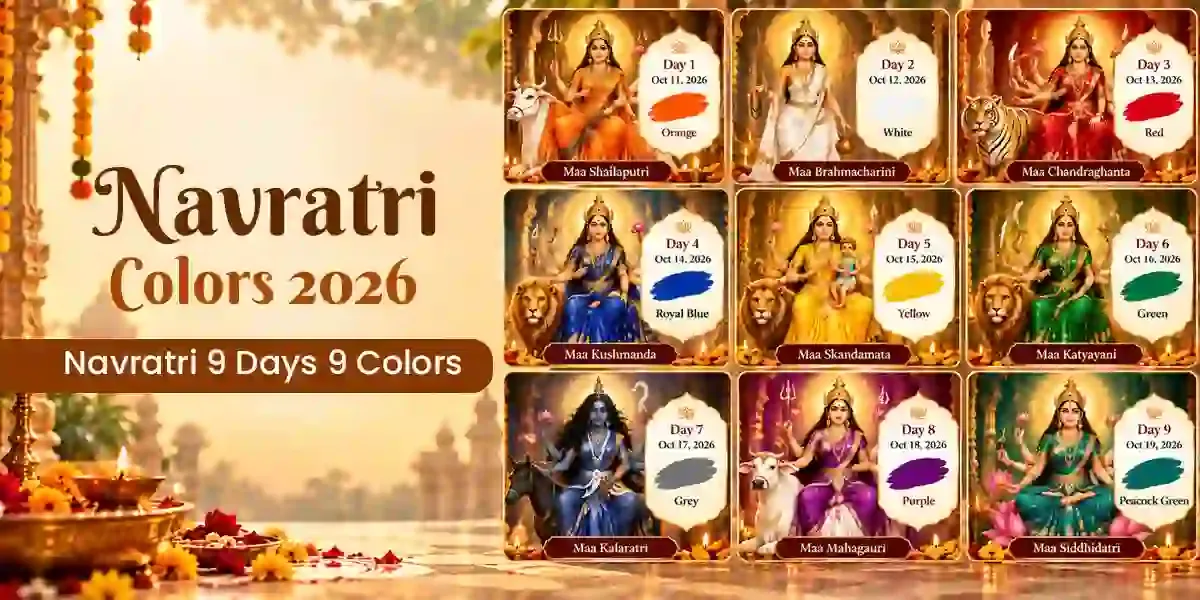
Navratri is one of the most revered Hindu festivals, celebrated with devotion, prayers, fasting, and the worship of Maa Durga. The word "Navratri" means “nine nights,” representing the nine nights dedicated to the nine divine forms of Goddess Durga, collectively known as Navdurga.
The festival celebrates the power of Shakti, the divine feminine energy that represents courage, wisdom, compassion, and strength. One of the most important traditions during Navratri is listening to or reading the Navratri Katha, which narrates the story of Maa Durga and her victory over the demon Mahishasura.
The Katha reminds devotees of the eternal triumph of dharma over adharma and encourages us to face difficulties with courage, faith, and inner strength.
The Story of Sumati and Her Devotion to Maa Durga
Long ago, in a beautiful city, there lived a Brahmin named Anath. He was a devoted worshipper of Bhagwati Goddess Durga and followed her teachings with faith.
Anath had a beautiful daughter named Sumati, who possessed many good qualities and was blessed with beauty and a gentle nature.
Sumati grew up in her father's home, playing happily with her friends, just as the moon gradually grows brighter during the waxing phase until it becomes full.
Whenever her father performed the puja and Havan of Goddess Durga, Sumati would always be present. She regularly joined him in worshipping the Divine Mother.
However, one day, Sumati went out to play with her friends and did not attend the puja of the Bhagwati Goddess Durga.
When her father noticed that she had neglected the worship, he became very angry. He said to her, “You have been careless and have failed to attend the puja of the Bhagwati Goddess Durga today. Because of this, I shall arrange your marriage to a poor man who suffers from leprosy.”
Hearing her father's harsh words, Sumati felt sad. However, she replied calmly, “Father, I am your daughter, and it is my duty to follow your wishes. You may do as you think best. You may marry me to a king, a poor man, or even a man suffering from leprosy. But ultimately, my marriage and my destiny will unfold as they are meant to.”
She continued, “Human beings may have many worries, but in the end, what the Lord wills is what happens. Every person must act and accept the fruits of those actions. It is our duty to perform our karma, while God determines the fruits of our deeds.”
Her fearless response made the Brahmin even angrier. He arranged her marriage to a man suffering from leprosy.
In anger, he told her, “Go now! Go and face the consequences of your actions. Let us see what your destiny has in store for you.”
Hearing these bitter words, Sumati felt deeply unfortunate about the circumstances she had been placed in. With a heavy heart, she left with her husband and went into the forest.
There, surrounded by wild and ferocious animals, the couple spent the night in great difficulty.
Seeing Sumati in such a difficult situation, Bhagwati Goddess Durga appeared before her, pleased by the merits of her past deeds.
The Goddess said, “O noble Brahmin woman, I am pleased with you. Ask for any boon you desire, and I shall grant it to you.”
Hearing the Goddess's words, Sumati was astonished. She asked, “Who are you, O Divine Mother, who is pleased with me? Kindly reveal your identity and tell me everything. I am your humble devotee, and I seek your blessings.”
The Goddess replied, “I am Adi Shakti, the primordial divine energy. I am Brahma Vidya and Saraswati, the source of divine knowledge and wisdom. When I am pleased with my devotees, I remove their sorrows and bless them with happiness.
“O Brahmin woman, I am pleased with you because of the spiritual merit you earned in your previous birth. Listen carefully, and I shall tell you the story of your past life.”
Goddess Durga continued, “In your previous birth, you were the wife of a Nishad, a hunter belonging to the Bhil community. You were a devoted wife and lived your life faithfully.
“One day, your husband committed a robbery. Because of this, the soldiers arrested both of you and put you in prison.
“During your imprisonment, neither you nor your husband was given any food to eat. You remained without food or water for nine days, and this period coincided with Navratri.
“Although you did not observe the fast intentionally, you unknowingly completed the nine-day Navratri fast.
“Because of this observance, I am pleased with you. Today, I shall grant you a boon. Tell me what you wish for.”
Hearing the words of Goddess Durga, Sumati bowed before her and said, “O Mother Durga, if you are truly pleased with me, I humbly bow before you. Please free my husband from his illness and remove his leprosy.”
The Goddess replied, “During those nine days of fasting, you earned spiritual merit. If you dedicate the merit of one day of that fast to your husband, he will be freed from leprosy and his body will become beautiful and radiant, like gold.”
Hearing this, Sumati was overjoyed. She gladly accepted the Goddess's words and dedicated the merit of one day of her fast to her husband's healing.
Through the blessings of Bhagwati Goddess Durga, her husband's illness disappeared. His body became healthy, youthful, and radiant, shining more brightly than the moon.
Seeing her husband's transformation and experiencing the immense power of the Divine Mother, Sumati was filled with gratitude. She bowed before Goddess Durga and prayed:
“O Mother Durga, you remove obstacles from all three worlds and free your devotees from sorrow. You relieve the suffering of the sick, bless those who please you, and destroy evil.
“You are the Mother and Father of the entire universe. O Ambe, because of my mistake, my father married me to a man suffering from leprosy and sent me away from my home. After being separated from my family, I wandered through the world and endured many difficulties.
“It was you, O Divine Mother, who helped me cross this ocean of suffering and rescued me from my misfortune.
“I offer my humble salutations to you. Please protect me from all hardships and bless me with your grace.”
Lord Brahma continued narrating the story to Vrishpathiji.
He said, “O Vrishpathi, after hearing Sumati's heartfelt prayers, Goddess Durga was pleased with her devotion.
“The Goddess blessed Sumati and said, ‘You will soon be blessed with a son named Udalak. He will be intelligent, wealthy, hardworking, and radiant.’
“After granting her this blessing, Goddess Durga said, ‘You may ask for another boon if there is anything else you desire.’
“Hearing these words, Sumati bowed before the Goddess and said, ‘O Mother Durga, if you are pleased with me, kindly explain the proper way to observe the Navratri fast. Please tell me the rituals that should be followed and the benefits one may receive from observing this sacred fast. I wish to understand the complete procedure.’
“Goddess Durga replied, ‘O Brahmin woman, I shall explain the complete method of observing the Navratri fast, which is believed to remove sins and lead devotees towards liberation, or Moksha. Listening to this sacred account and understanding its significance is also considered spiritually beneficial.’”
The Rituals and Method of Observing Navratri Vrat
According to the traditional Navratri Vrat Katha, Goddess Durga explained the rituals and method of observing the Navratri fast.
She said, “During the month of Ashwin, devotees should observe the fast from the first day of the bright fortnight until the ninth day. Those who cannot remain without food throughout the day may eat one meal.
“With the guidance of learned and respected Brahmins, devotees should establish the sacred Kalash and sow wheat grains as part of the ritual. Water should be offered to the Kalash every day.
“Clay images of Mahakali, Mahalakshmi, and Mahasaraswati should be prepared, and the three Goddesses should be worshipped daily according to the prescribed rituals. Flowers should be offered, and the worship should be performed with devotion.
“Different flowers and offerings are associated with different blessings. Offering Bijora flowers is believed to bring beauty, Jaiphul flowers brilliance, Amla happiness, and bananas ornaments and prosperity.
“Devotees should perform the prescribed rituals with fruits and conduct Havan. Offering wheat during the Havan is associated with wealth and prosperity, while offering Kheer is associated with Moksha, or spiritual liberation.
“Offering Champa flowers is believed to bring wealth, while leaves are associated with radiance and happiness. Amla is associated with the fulfillment of one's work, bananas with the blessing of a son, and lotus flowers with royal honor, wealth, and happiness.
“Devotees may also perform Havan using Kheer, ghee, coconut, honey, jowar, sesame seeds, and fruits according to the traditional procedure. Such offerings are believed to help devotees receive the blessings they seek.
“The person observing the fast should offer respectful salutations to the Acharya, or spiritual teacher, with sincere devotion and provide Dakshina, a traditional offering, for conducting the Yagna.
Benefits of Navratri Vrat Katha
Goddess Durga further explained, “Those who follow the prescribed rituals of this great fast with devotion are believed to receive happiness and blessings. It is said that charitable acts performed during these nine days bring great spiritual merit.
“O Brahmin woman, the complete observance of the fast and its rituals may be performed in a temple or at home, according to the prescribed instructions and one's tradition.”
After explaining the rituals and significance of the Navratri fast, Goddess Durga disappeared.
Final Words
The story of Navratri reminds us of the divine strength of Maa Durga and the victory of good over evil. As devotees celebrate these nine sacred nights, they honor the nine forms of the Goddess and the qualities of courage, devotion, compassion, and wisdom that each represents.
Moreover, reading the Navratri Katha is a beautiful way to understand the significance of this festival and reconnect with its spiritual teachings.