
Phalguna Amavasya 2026: Date, Rituals & Significance
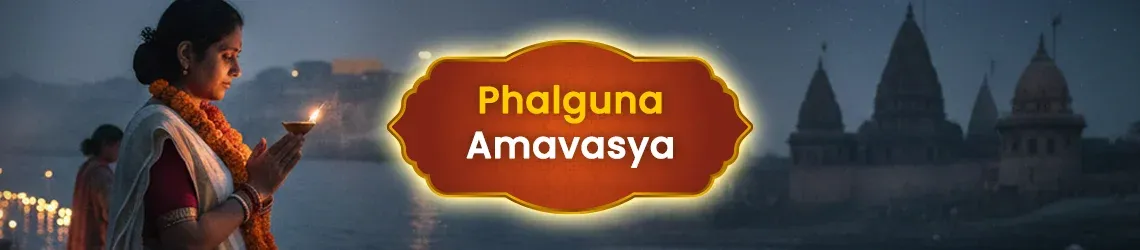
Phalguna Amavasya is the new moon day (no moon day) that falls in the Hindu month of Phalguna, usually in February or March. It is one of the most significant Amavasya in February, which is devoted to paying respect to ancestors and carrying out ceremonies for their blessings and tranquility.
It's believed that on this day, ancestors visit their descendants on Earth to receive offerings. When you honor your ancestors properly on this day, they bless you with prosperity, health, and remove obstacles from your life.
Due to its proximity to the festivals of Holi and Maha Shivaratri, the Falgun Amavasya has great religious significance, making the entire time period spiritually charged.
Many people often search for 'Amavasya feb date and time.' Here to answer your question, we've brought you the exact date along with auspicious timings for February Amavasya, Phalguna Amavasya.
When is Amvasya in Feb 2026?
The Phalguna Amavasya 2026 occurs on Tuesday, February 17, 2026.
Amavasya Tithi Timings:
Tithi Begins: February 16, 2026, at 5:34 PM
Tithi Ends: February 17, 2026, at 5:30 PM
Auspicious Muhurat for Holy Bath and Donations:
Brahma Muhurta: 05:16 AM to 06:07 AM (or 05:35 AM to 06:25 AM).
Abhijit Muhurta: 12:37 PM to 01:23 PM
Significance of Phalgun Amavasya
The significance of Phalguna Amavasya goes beyond just a calendar date; it's a powerful spiritual opportunity.
Ancestor Worship Day: Pitru Puja, or ancestor worship, is the main focus of this Amavasya. Hindus believe that on this day, the boundary between the living and the ancestral realm becomes thin, allowing departed souls to visit their families and receive offerings.
Removing Pitru Dosha: According to Vedic astrology, when a person's souls are restless, or their ancestors are unhappy, Pitru Dosha shows up in their horoscope. Recurring challenges, money troubles, health concerns, and family disputes are all brought on by this dosha. Pitru Dosha can be considerably reduced or eliminated by performing the appropriate rites on Phalguna Amavasya.
Blessings from Lord Vishnu and Lakshmi: Worshiping Lord Vishnu and Goddess Lakshmi on Phalguna Amavasya brings prosperity, happiness, and peace to the home. It's an auspicious day for seeking divine blessings for material and spiritual well-being.
Liberation for Ancestors: The Shraddha ceremonies performed on this day help ancestors attain moksha (liberation) and move forward in their spiritual journey. When ancestors are at peace, they bless their descendants generously.
Washing Away Sins: Taking a holy bath in sacred rivers on this day is believed to cleanse accumulated sins, both yours and your ancestors'. It's considered equivalent to bathing during Kumbh Mela in terms of spiritual merit.
Phalguna Amavasya Rituals and Puja Vidhi
The rituals for Phalguna Amavasya focus on ancestor worship and spiritual purification.
1. Holy Bath (Snan) Ritual
When: Early morning during Brahma Muhurta (approximately 1.5 hours before sunrise).
Where: Sacred rivers (Ganga, Yamuna, Godavari) are ideal. If unavailable, bathe at home after adding Ganga Jal or tulsi leaves to your water.
How: Offer prayers to the water, chant "Om Namo Narayanaya" or "Om Ganga Maiyya Namaha," immerse three times, offer water to the Sun god, and pray for ancestors' peace.
2. Pitru Tarpan (Water Offerings to Ancestors)
This is the most important ritual of the day.
Items Needed: Black sesame seeds, raw rice, kusha grass, water (preferably from the holy river), and clean white or yellow clothes.
Process: After bathing, wear clean clothes and face South.
Hold sesame seeds and rice in your right palm, add water, chant "Om Pitru Devatabhyo Namaha" while remembering your ancestors (father, grandfather, great-grandfather on paternal side; mother, grandmother, great-grandmother on maternal side).
Release the water through your fingers toward the South. Repeat three times for each ancestor.
3. Pind Daan Ritual
For those with severe Pitru Dosha or specific ancestral issues, Pind Daan is performed.
What it is: Offering rice balls (pindas) to ancestors to satisfy their souls and grant them peace.
Where is it done: Traditionally performed at sacred places like Gaya (Bihar), Prayagraj, Haridwar, or Varanasi. Can also be done at home with a priest's guidance.
Items Needed: Rice, barley flour, milk, ghee, honey, black sesame seeds, kusha grass
Note: This complex ritual is best performed under the guidance of a knowledgeable priest.
4. Shraddha Ceremony
A formal ceremony involving feeding Brahmins, offering foods ancestors liked, chanting mantras, and making donations in ancestors' names.
5. Charity and Donations (Daan)
You can donate: Food grains, dark-colored clothes, black sesame seeds, and money to the needy.
Feed cows and crows (considered messengers of ancestors).
Best Time: Brahma Muhurta or Abhijit Muhurta.
6. Worshiping Lord Vishnu and Lakshmi
After ancestor rituals, set up images of Vishnu and Lakshmi, light a lamp, offer flowers and sweets, chant "Om Namo Narayanaya" and "Om Shreem Mahalakshmayai Namaha," perform aarti, and pray for family prosperity.
7. Fasting on Phalguna Amavasya
You can keep: Complete fast (no food/water), partial fast (fruits and milk), or simple fast (one evening meal).
Those seeking to remove Pitru Dosha or ancestral blessings should fast. Break the fast after evening aarti with simple sattvic food.
Preserving Heritage: Why Phalguna Amavasya Matters Today
Phalguna Amavasya offers a unique chance for us to honor our heritage and pay respect to our ancestors. Many families notice repeating patterns such as health issues, financial struggles, and relationship problems, which astrology attributes to Pitru Dosha.
Regardless of whether you consider it ancestral karma or just unresolved family energy, the rituals offer a means of breaking harmful cycles and bringing about psychological closure.
For Indian families living overseas or in cities, commemorating this day preserves cultural heritage while fostering an environment of acceptance and gratitude.