

Holashtak 2026 : Start Date, End Date, Meaning & Dos and Don'ts
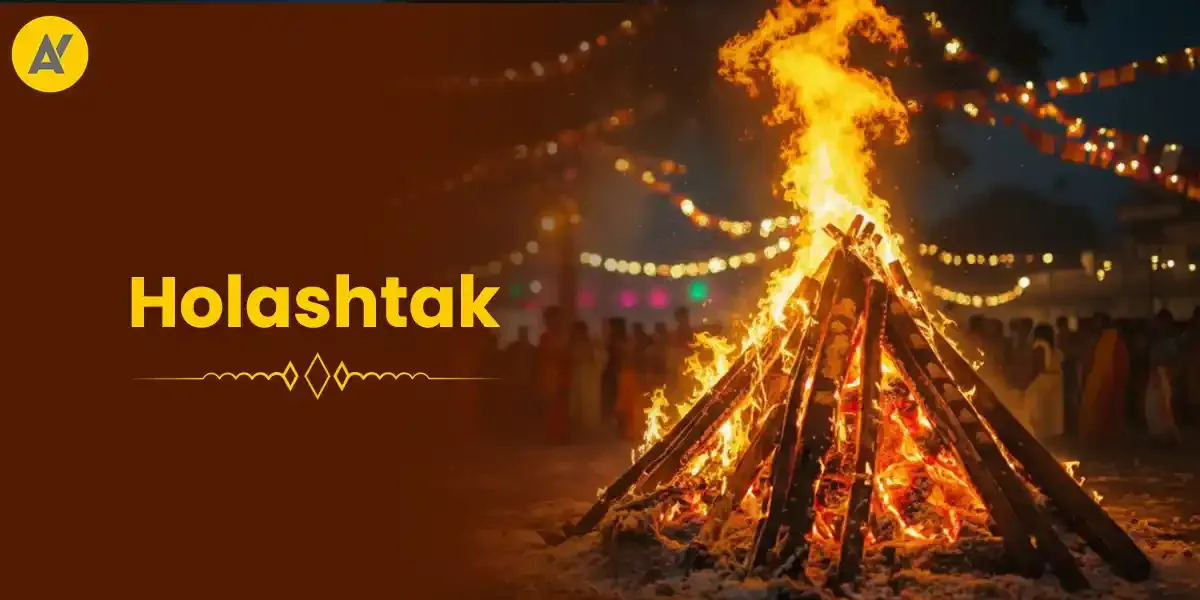
Holashtak is an eight-day period in the Hindu calendar that falls right before Holi. The word itself tells you what it is, ‘Holi’ combined with ‘Ashtak’, meaning eight, which refers to the eight days of Holi.
Many people refer to it as an “inauspicious period,” but that's not the complete picture; Holashtak is intentionally set aside as a time for spiritual preparation, charity, and reflection rather than big life events.
Now that you know Holashtak's meaning, you're probably curious about when it falls in 2026. Let's check the dates.
Holashtak 2026 Start Time and Date
According to the Hindu calendar, Holashtak starts from the eighth day (Ashtami) of the bright fortnight (shukla paksha) in the month of phalguna and it ends on Phalguna Purnima, which is the day of Holika dahan.
Now you’re probably wondering: when will Holashtak start in 2026?
- Holashtak 2026 Start Date: Tuesday, February 24, 2026
- Holashtak 2026 End Date: Tuesday, March 3, 2026 (Holika Dahan)
- Ashtami Tithi Begins: February 24, 2026, at 7:01 AM
- Ashtami Tithi Ends: February 25, 2026, at 4:51 AM
This year, Holashtak runs for a full nine days due to the way the tithi (lunar day) falls. It ends with Holika Dahan on the evening of March 3, 2026, after which Rangwali Holi (the color celebration) takes place on March 4, 2026.
Where It All Began: The Stories Behind Holashtak
According to Hindu scriptures, these eight days carry an intense spiritual energy rooted in two powerful events.
The demon king Hiranyakashipu, blinded by ego, put his own son Prahlad's faith to the ultimate test by repeatedly attempting to kill him, simply because Prahlad refused to stop worshiping Lord Vishnu.
Another story says Lord Shiva opened his fierce third eye and reduced Kamadeva, the god of love, to ashes for daring to disturb his deep meditation. Both events, one representing ego-driven cruelty and the other divine wrath, created an unstable atmosphere during these eight days, making Holashtak an unfavorable time for new beginnings and auspicious activities.
Besides the stories, there are other reasons to consider
- Planetary Instability: During Holashtak, the eight planets (excluding the Sun) are believed to be in aggressive or unstable positions. When planetary energies are in flux, starting new things becomes risky
- Period of Testing: Since these eight days represent Prahlad's period of suffering and testing, it's considered a time of hardship rather than celebration. Starting something new during hardship isn't considered wise.
- Weather Changes: There's actually a practical reason, too. The week before Holi marks dramatic weather shifts between winter and summer. This transition weakens immunity and increases the chances of illness.
Important Note: The inauspicious nature of Holashtak primarily applies to specific regions of North India, particularly areas near the Vyas, Ravi, and Sutlej rivers in Punjab, and the Pushkar area of Rajasthan.
👉 Check the most auspicious Griha Pravesh Muhurat 2026 before entering your new home.
Dos and Don'ts Holashtak
Holashtak comes with its own set of rules, and honestly, it's easy to accidentally do something you shouldn't during this period.
To help you navigate these eight days with confidence, here's a clear list of what to do and what to avoid during Holashtak 2026.
What You Should Do During Holashtak (Dos)
Charity (Daan): This is the best thing to do during Holashtak. Donations made during this period carry special spiritual merit.
- Donate clothes, especially warm ones (as winter transitions to summer)
- Give food grains: rice, wheat, pulses
- Donate blankets and essentials to those in need
- Give money to the needy
- Feed the poor and Brahmins
Spiritual Practices:
- Perform penance and meditation
- Chant Vishnu mantras and devotional hymns
- Read sacred texts and scriptures
- Visit temples for darshan
- Offer prayers to Lord Vishnu and Narasimha
If you want a more detailed guide on Holashtak Dos and Don'ts along with what to wear for protection during this period, read our complete guide here: Holashtak Dates, Things to Avoid & What to Wear for Protection
Holika Dahan Preparations:
- On Day 1, tie a colorful cloth on a neem or babul tree branch (later used in Holika Dahan)
- Each evening, add dry sticks to the Holika pyre
- By Day 8, the pile is ready for the bonfire
Things to Avoid During Holashtak (Don'ts)
Major Life Events to Postpone:
- Weddings and engagement ceremonies
- Griha Pravesh (housewarming ceremonies)
- Naming ceremonies (Namkaran)
- Mundan (first haircut ceremony)
- Sacred thread ceremony (Upanayana)
- Starting formal education
- Annaprashan (first solid food ceremony for babies)
Business and Financial Decisions:
- Starting a new business or venture
- Buying a new property or land
- Purchasing vehicles
- Making major investments
- Signing important contracts or agreements
Other Things to Avoid:
- Starting construction of a new home
- Organizing large celebrations or social functions
Wondering if a decision you're planning falls under Holashtak restrictions? Want to know the best time to reschedule your auspicious events after Holashtak ends? Talk to an Astrologer on Astroyogi Today.
Holashtak: The Beautiful Countdown to Holi
Holashtak isn't a gloomy period but a sacred pause, a divine invitation to turn inward before the world bursts into color. Just as a seed needs darkness before it blooms, these eight days of reflection, charity, and devotion prepare your soul for the joy that follows.
When the Holika Dahan bonfire blazes on March 3, everything held back is released in one magnificent moment of fire and light, followed the next morning by the explosion of colors that is Holi.
So, as Holashtak 2026 begins on February 24, postpone what needs to be postponed, donate generously, and pray sincerely. Because on March 4, 2026, Holi doesn't just arrive; it blooms in full, vibrant color.
Team Astroyogi is an experienced in-house editorial team of passionate writers, researchers, and astrology enthusiasts dedicated to making ancient divination sciences more accessible and meaningful in everyday life. With years of collective experience in creating insightful astrology and spirituality content, the team specializes in simplifying complex spiritual concepts into practical guidance for readers seeking clarity, balance, and personal growth. The Astroyogi editorial team possesses expertise across a wide range of subjects, including Indian Astrology, Vedic Astrology, Planetary Transits, Horoscope Analysis, Vastu Shastra, Numerology, Tarot, Spiritual Wellness, and Ritual Practices. Every piece of content is carefully researched, fact-checked, and crafted with the intention of offering reliable, insightful, and easy-to-understand guidance rooted in traditional wisdom. Driven by a commitment to authenticity and reader trust, Team Astroyogi strives to create content that empowers individuals to navigate life’s opportunities and challenges with confidence, positivity, and inner peace. Their mission is to bridge ancient astrological knowledge with modern-day relevance, helping readers make informed decisions and lead more harmonious lives.