
Shukla Paksha
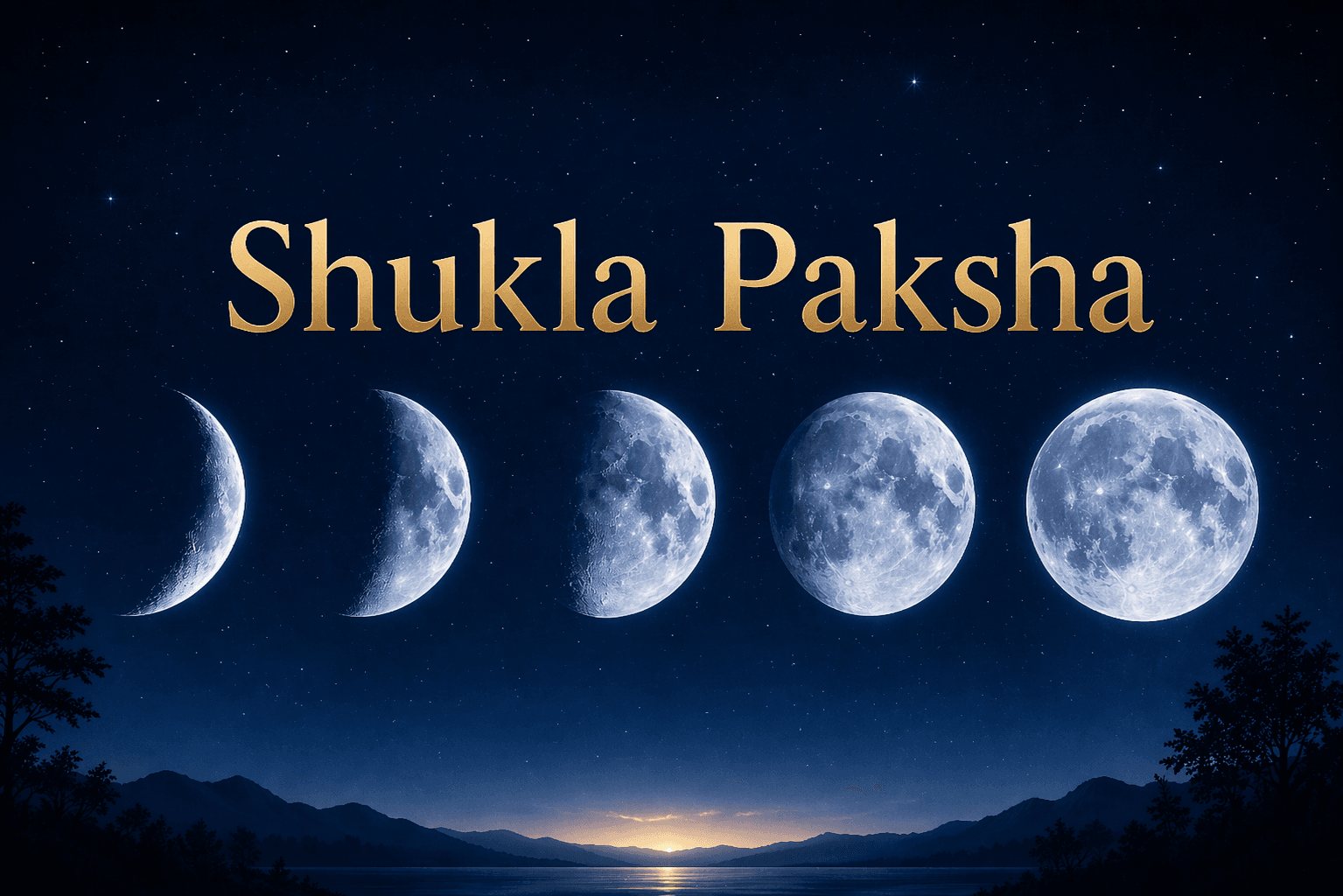
The word Shukla means white, bright, pure. Paksha means wing. Put together, Shukla Paksha names the half of the lunar month when the Moon's lit surface grows larger each night, climbing from a thin crescent on the day after Amavasya all the way up to the full circle of Purnima.
Check More Panchang Details











Talk to Astrologers
View All




Why the Waxing Phase Carries Such Weight in Hindu Thought
A growing Moon has been read, across Vedic literature, as a sign of prana itself expanding. The Shatapatha Brahmana links the waxing cycle to the nourishment of all living beings; Ayurveda treats the same phase as the natural window for building, strengthening, and consolidating the body's resources. Jyotisha adds a precision layer on top of this symbolic reading by assigning each of the fortnight's fifteen days a ruling deity and a recommended set of actions.
The practical result of this layered inheritance is a calendar where nearly every major rite of passage — naming ceremonies, first feeding, thread ceremonies, marriages, housewarmings, coronations in classical kingdoms — gravitates toward the bright fortnight by default.
The Cosmology Behind a Brightening Sky
Each lunar day represents 12 degrees of angular separation between the Sun and the Moon. During the waxing fortnight, that gap opens from 0 degrees (Amavasya, when the two are conjunct) to 180 degrees (Purnima, when they stand opposite each other across the zodiac). This widening angle corresponds to the increasing illumination we observe visually.
Philosophically, Vedic texts read the Sun as Atman (the immutable self) and the Moon as Manas (the fluctuating mind). During the bright fortnight, the mind is said to grow increasingly visible to the self — which is why this phase is traditionally considered excellent for visualisation practices, mantra intensification, and any work that requires mental clarity translating into outward action.
For personalised insight into which waxing days best support your goals this month, speak with an Astroyogi astrologer.
The Fifteen Bright Tithis and Their Signatures
| Day | Tithi Name | Ruling Deity | Celebrated Observances |
|---|---|---|---|
| 1 | Pratipada | Agni | Gudi Padwa, Ugadi begin here in Chaitra |
| 2 | Dwitiya | Brahma | Bhai Dooj variants, foundation ceremonies |
| 3 | Tritiya | Gauri | Akshaya Tritiya in Vaishakha, Teej festivals |
| 4 | Vinayaka Chaturthi | Ganesha | Ganesh Chaturthi in Bhadrapada |
| 5 | Panchami | Saraswati | Vasant Panchami in Magha, Naga Panchami |
| 6 | Shashthi | Kartikeya | Skanda Shashthi |
| 7 | Saptami | Surya | Ratha Saptami, Surya Jayanti |
| 8 | Ashtami | Durga | Durga Ashtami during Navratri |
| 9 | Navami | Durga | Ram Navami in Chaitra |
| 10 | Vijaya Dashami | Dharma | Dussehra in Ashwin |
| 11 | Ekadashi | Vishnu | Nirjala, Devshayani, Prabodhini |
| 12 | Dwadashi | Vishnu | Vaman Dwadashi in Bhadrapada |
| 13 | Pradosh Trayodashi | Shiva | Twilight Shiva worship |
| 14 | Chaturdashi | Shiva | Anant Chaturdashi in Bhadrapada |
| 15 | Purnima | Chandra | Guru, Buddha, Sharad, Kartik Purnima |
The Four Great Celebration Days
Four tithis in the bright fortnight host the bulk of India's most-loved festivals:
Tritiya (third day) carries Akshaya Tritiya in Vaishakha — one of the three-and-a-half most auspicious days of the entire Hindu year, on which any new venture, gold purchase, or charitable act is said to yield multiplying rewards.
Navami (ninth day) holds Ram Navami in Chaitra, celebrating the birth of Rama at the peak of the Chaitra Navratri fasts.
Dashami (tenth day) gives us Vijaya Dashami in Ashwin — Dussehra — the day that culminates Navratri and commemorates the triumph of Rama over Ravana and Durga over Mahishasura.
Purnima (fifteenth day) hosts a rotating cast of full-moon festivals: Guru Purnima in Ashadha, Buddha Purnima in Vaishakha, Sharad Purnima in Ashwin, and Kartik Purnima. Each full moon carries a distinct flavour, from teacher veneration to harvest celebration.
Why Weddings Cluster in the Bright Fortnight
Indian wedding season statistics consistently show Shukla Paksha dates dominating muhurat calendars. The reasons are both astrological and cultural:
- The waxing Moon symbolises a growing, thriving partnership
- Most auspicious tithis fall here (Dwitiya, Tritiya, Panchami, Saptami, Ekadashi, Trayodashi)
- Combined with favourable nakshatras — Rohini, Mrigashira, Magha, Hasta, Swati, Anuradha — the available muhurat windows multiply
- Public celebration aligns with the outward-facing energy of the phase
Not every bright day is equally suited, however. Certain Shukla Paksha days that happen to coincide with inauspicious nakshatras or yogas are skipped even within wedding season.