

How to Do the Durga Saptashati Path: Vidhi, Rules, and 9-Day Schedule
Durga Saptashati Path is a sacred recitation dedicated to Goddess Durga. It describes her different forms and her victory over demons, symbolizing the triumph of good over evil. The text consists of 13 chapters and 700 verses.
Many devotees perform Durga Saptashati Path during Navratri to worship Maa Durga and seek her blessings. The complete text can be recited over nine days by dividing the chapters into smaller sections.
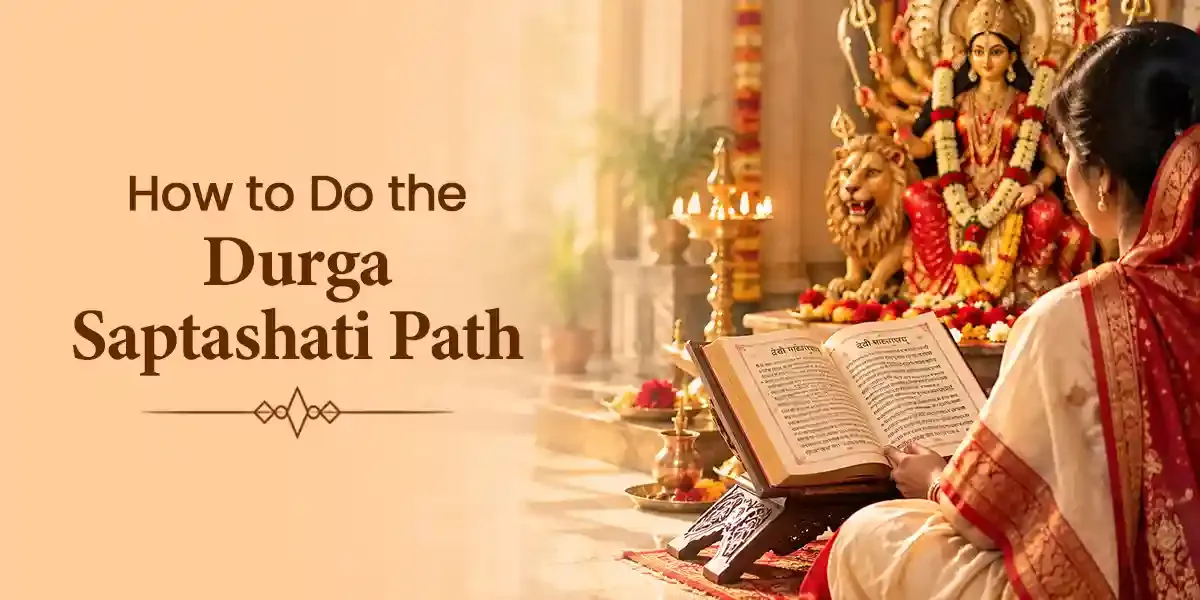
If you want to know how to do the Durga Saptashati Path at home, this guide explains the basic puja steps, the rules to follow, and the chapter-wise schedule for nine days.
How to Do Durga Saptashati Path at Home
You can follow these steps to perform Durga Saptashati Path at home. The exact rituals may vary according to your family tradition.
1. Prepare for the Puja
Take a bath, wear clean clothes, and clean the place where you will perform the puja. Place a picture or idol of Maa Durga in your worship area.
Keep your Durga Saptashati book, diya, incense sticks, flowers, kumkum, and water ready. You can also arrange fruits or sweets to offer as prasad.
2. Begin with a Prayer
Light the diya and offer flowers to Maa Durga. Sit comfortably in front of the Goddess and pray for her blessings.
You may also take a sankalp, which means making a resolve to complete the path with devotion. If you are following a nine-day schedule, you can include this intention in your prayer.
3. Recite the Preparatory Prayers
In many traditional methods, devotees recite Devi Kavach, Argala Stotra, and Keelak Stotra before beginning the main chapters. Some methods include additional prayers and mantras.
The exact order may differ depending on the tradition you follow. Use a reliable Durga Saptashati book or follow a priest's guidance for the correct sequence.
4. Read the Chapters for the Day
Open your Durga Saptashati book and recite the chapters assigned for that day. Read slowly and pronounce the verses as correctly as possible.
If you find Sanskrit difficult to read, choose a book that includes transliteration or pronunciation guidance. If you are completing the path over nine days, follow the schedule below so that you cover all 13 chapters.
5. Complete the Daily Puja
After finishing the day's chapters, offer a closing prayer to Maa Durga. Depending on your tradition, you may recite concluding prayers and perform aarti.
You can then offer prasad to the goddess and distribute it among family members.
Durga Saptashati Path Vidhi in 9 Days
The Durga Saptashati has three sections called Charitras. The first section covers Chapter 1, the second covers Chapters 2–4, and the third covers Chapters 5–13.
For the nine-day recitation, you can divide the chapters according to the following schedule. Day
| Day | Chapters to Read |
|---|---|
| Day 1 | Chapter 1 |
| Day 2 | Chapters 2, 3, and 4 |
| Day 3 | Chapters 5 and 6 |
| Day 4 | Chapter 7 |
| Day 5 | Chapter 8 |
| Day 6 | Chapters 9 and 10 |
| Day 7 | Chapter 11 |
| Day 8 | Chapter 12 |
| Day 9 | Chapter 13 |
This is one commonly followed nine-day schedule. Some traditions divide the chapters differently, so follow the method recommended by your family priest if you observe a specific ritual.
Durga Saptashati Path Rules
Devotees generally follow certain practices while performing Durga Saptashati Path. These help them maintain discipline and focus during the recitation.
- Keep the puja area clean: Clean the place of worship before beginning.
- Read the chapters in order: Follow the schedule you have chosen and avoid skipping chapters.
- Pronounce the verses carefully: Read at a comfortable pace instead of rushing through the text.
- Set aside a regular time: Try to complete your daily recitation at a time that suits your routine.
- Follow your family's customs: Fasting, food restrictions, and additional rituals may vary between traditions. Follow the practices suitable for you.
- Complete the path with devotion: Make a sincere effort to follow your nine-day schedule.
If you are unsure about a particular ritual or rule, consult a knowledgeable priest or follow the instructions in your chosen text.
What to Do After Completing Durga Saptashati Path
On the ninth day, recite Chapter 13 to complete the nine-day schedule. After the recitation, offer prayers to Maa Durga and perform aarti according to your tradition. Some families also perform havan, Kanya Pujan, or other concluding rituals during Navratri. These practices depend on family customs and the method being followed. You can offer prasad to the Goddess and distribute it among family members to conclude the puja.
Conclusion
Durga Saptashati Path can be completed over nine days by dividing its 13 chapters according to a planned schedule. To follow the Durga Saptashati Path Vidhi in 9 days, prepare your puja area, recite the prescribed prayers, and read the assigned chapters each day. Follow the Durga Saptashati Path rules according to your family tradition, and seek guidance if you are unsure about the ritual sequence. With a clear schedule and regular practice, it becomes easier to complete the recitation during Navratri.
Talk to Astrologers
View All




Team Astroyogi is an experienced in-house editorial team of passionate writers, researchers, and astrology enthusiasts dedicated to making ancient divination sciences more accessible and meaningful in everyday life. With years of collective experience in creating insightful astrology and spirituality content, the team specializes in simplifying complex spiritual concepts into practical guidance for readers seeking clarity, balance, and personal growth. The Astroyogi editorial team possesses expertise across a wide range of subjects, including Indian Astrology, Vedic Astrology, Planetary Transits, Horoscope Analysis, Vastu Shastra, Numerology, Tarot, Spiritual Wellness, and Ritual Practices. Every piece of content is carefully researched, fact-checked, and crafted with the intention of offering reliable, insightful, and easy-to-understand guidance rooted in traditional wisdom. Driven by a commitment to authenticity and reader trust, Team Astroyogi strives to create content that empowers individuals to navigate life’s opportunities and challenges with confidence, positivity, and inner peace. Their mission is to bridge ancient astrological knowledge with modern-day relevance, helping readers make informed decisions and lead more harmonious lives.