
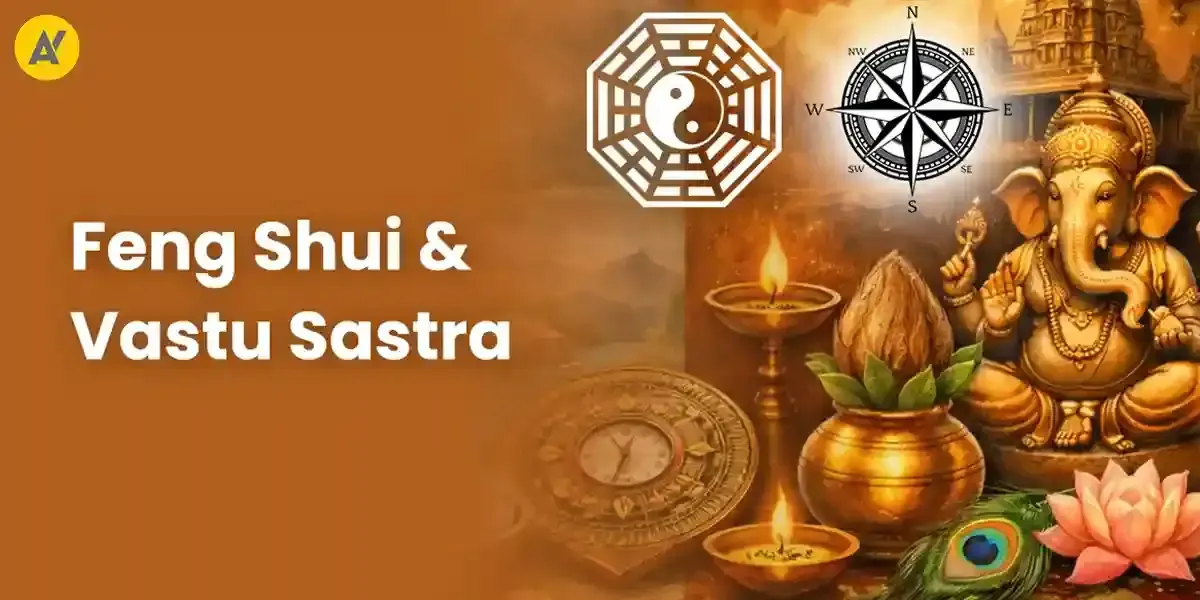

Difference Between Feng Shui and Vastu Shastra: A Complete Beginner’s Guide
Have you ever wondered why some homes feel peaceful while others feel chaotic?
Two ancient practices, which are Feng Shui and Vastu Shastra, claim to have the answer. Both promise to bring balance, prosperity, and positive energy into your home, but they work in completely different ways.
If you're new to these concepts, this guide will help you understand what they are, why they work differently, and which one might be right for you.
What are Feng Shui and Vastu Shastra?
Feng Shui is a Chinese practice that's around 3,000 years old. It's based on Taoist philosophy and focuses on arranging your living space so that positive energy (called "Chi") flows freely.
The name literally means "wind and water," representing the natural forces that shape our environment.
Whereas Vastu Shastra is an ancient Indian science that's over 5,000 years old. It comes from the Vedas, the sacred Hindu texts, and is all about designing and building homes in harmony with cosmic forces.
The word "Vastu" means dwelling, and "Shastra" means science. Think of it as the traditional Indian way of architecture and home planning.
While both aim to create harmonious living spaces, they come from different cultures and follow completely different rules. Let's understand why.
Feng Shui and Vastu: Understanding 10 Key Differences
Here's the simplest way to understand the fundamental difference between these two, and fair warning, this analogy might make you crave dessert:
So, Vastu is like baking a cake, in which you need the right ingredients in the right order from the very start. Once it's baked, you can't really change the inside. You have to get it right during construction.
Whereas Feng Shui is like decorating a cake. So,the cake is already there, and now you're making it look and feel better with frosting, sprinkles, and decorations. You can always change and improve it.
Interesting, right?
So, what makes them so different? To answer that, we brought out 10 key differences between Feng Shui and Vast shastra.
1. Origin: Where They Come From
Vastu Shastra originated in ancient India and is deeply rooted in Hindu and Vedic traditions. It's mentioned in ancient texts like the Vedas and was used to design temples, palaces, and homes. Feng Shui comes from China and is based on Taoist philosophy, which focuses on harmony with nature and the balance of energies. Think of them as two different cultural approaches with the same goal, to create harmonious spaces.
2. Elements - The Building Blocks
Vastu uses Earth, Water, Fire, Air, and Space as cosmic building blocks. Feng Shui uses Wood, Fire, Earth, Metal, and Water, which interact in cycles, meaning some elements feed each other while others control each other.
3. Approach - How They Map Your Space
Vastu uses strict compass directions (kitchen must be in Southeast, bedroom in Southwest, etc.) based on the sun's path and magnetic fields. Feng Shui employs a flexible Bagua map that overlays any space, focusing on life areas such as career, wealth, and relationships, rather than fixed directions.
4. When to Apply - Timing Matters
Vastu works best when building a new home from scratch, as it's about getting the structure right from the beginning, just like baking a cake. Feng Shui is perfect for existing homes because you can improve energy flow anytime with simple changes, just like decorating a cake.
5. Focus - Structure vs. Energy:
Vastu remedies often need construction work (moving doors, adding windows, relocating rooms). Feng Shui fixes are simple and instant, like adding mirrors, plants, water features, changing colors, or rearranging furniture without any renovation.
6. Flexibility - Rigid Rules vs. Adaptable Solutions
Vastu has strict, unchanging guidelines that are difficult to modify after a building is constructed.. Feng Shui is much more flexible—if one solution doesn't work for your space, there are multiple alternatives you can try.
7. Use of Colors - Calming Neutrals vs. Vibrant Energy
Vastu recommends soft, understated color palettes for your home to foster a tranquil and harmonious living environment. White is particularly favored as it helps maintain equilibrium in different areas of your space. Feng Shui, conversely, welcomes vivid, eye-catching colors to energize spaces and invite prosperity. Red symbolizes vitality and financial success, gold represents abundance and opulence, and various hues can be strategically placed in different zones.
8. The Northeast Direction - Different Meanings
Feng Shui and Vastu Shastra practices recognize the Northeast as significant, yet their interpretations diverge completely. In Vastu, the Northeast holds the highest spiritual importance and auspiciousness. It's where mental clarity and spiritual awareness are centered. In Feng Shui, the Northeast corresponds to the Knowledge and Personal Development sector on the Bagua chart. It concerns anchoring your intellect and boosting educational pursuits, rather than spiritual matters specifically.
9. Sacred Objects and Symbols - Cultural Specificity
The recommended items and meaningful symbols in each practice mirror their distinct cultural heritage. Vastu encourages displaying elements significant to Hindu spirituality, which is a Tulsi plant for cleansing negative influences and promoting wellness. Feng Shui advocates for its own collection of meaningful items like a jolly Buddha figure for contentment and material success, fortunate bamboo stalks for development and strength, melodious wind chimes to break up stale energy and welcome beneficial Chi, spherical crystals to amplify vitality, and ancient coins bound with crimson string for financial gain.
10. Permanency - Fixed Blueprint vs. Changing Energies
Vastu is like carved in stone, meaning once your building is designed and constructed following Vastu guidelines, those principles stay the same forever. The sun's path won't change, magnetic fields remain constant, so the rules don't need updating. Feng Shui is more like following the seasons, meaning it changes every year! The Bagua map and energy directions shift with each Chinese Lunar New Year based on planetary movements. What worked for your wealth corner last year might need tweaking this year. Feng Shui practitioners use systems like Flying Stars to track these annual energy changes, making it more dynamic but requiring regular updates.
Feng Shui & Vastu: Can You Use Both Together?
This is a common question. Technically, yes, but it can get tricky because sometimes their recommendations contradict each other. For example, Vastu might say your kitchen must be in the Southeast, while Feng Shui might suggest a different location based on your Bagua map.
If you want to combine them, work with experienced practitioners who understand both systems. Or, choose one as your primary guide and borrow small, non-conflicting elements from the other.
Need expert guidance on Vastu or Feng Shui for your home? Talk to an astrologer on Astroyogi today and get personalized advice tailored to your space and energy.
Final Thoughts: Which One Should You Choose?
Feng Shui and Vastu are both ancient wisdom traditions with valuable insights about creating harmonious living spaces.
Neither is "better" than the other. They're simply different approaches to the same goal:
Creating a home where you feel balanced, peaceful, and prosperous.
The best system for you is the one that aligns with your beliefs, circumstances, and practical needs.
Whether you choose Vastu's fixed cosmic principles or Feng Shui's flowing energy concepts, remember that your intention matters most. A home arranged with awareness, care, and positive intention will always feel better than one where these practices are followed mechanically without understanding.
Trust your intuition, respect whichever tradition you choose to follow, and most importantly, create a space that truly feels like home to you.
Team Astroyogi is an experienced in-house editorial team of passionate writers, researchers, and astrology enthusiasts dedicated to making ancient divination sciences more accessible and meaningful in everyday life. With years of collective experience in creating insightful astrology and spirituality content, the team specializes in simplifying complex spiritual concepts into practical guidance for readers seeking clarity, balance, and personal growth. The Astroyogi editorial team possesses expertise across a wide range of subjects, including Indian Astrology, Vedic Astrology, Planetary Transits, Horoscope Analysis, Vastu Shastra, Numerology, Tarot, Spiritual Wellness, and Ritual Practices. Every piece of content is carefully researched, fact-checked, and crafted with the intention of offering reliable, insightful, and easy-to-understand guidance rooted in traditional wisdom. Driven by a commitment to authenticity and reader trust, Team Astroyogi strives to create content that empowers individuals to navigate life’s opportunities and challenges with confidence, positivity, and inner peace. Their mission is to bridge ancient astrological knowledge with modern-day relevance, helping readers make informed decisions and lead more harmonious lives.