
Hariyali Teej Vrat Katha (Hariyali Teej Story)
In Northern India, women wear green, serenade in the rain during the monsoons, and joyfully swing on beautifully painted hindola swings to celebrate Hariyali Teej annually.
Behind every ritual lies the story of Hariyali Teej. This must be considered one of the most divine love stories in India, reflecting a woman's patience and commitment to love. Mothers and grandmothers observe fasts calmly and serenade with traditional folk songs amid the pouring rain outside. This is a true depiction of dedication towards a festival.
Here lies the story of Hariyali Teej broken into pieces.
What Does "Hariyali" Actually Mean?
Before getting to the story itself, it helps to understand the name. Hariyali means "greenery," and the festival arrives right in the middle of Shravan, when the monsoon has turned fields, hills, and treetops a deep, glowing green. It falls on Shravan Shukla Tritiya, the third day of the bright lunar fortnight; hence, it is also called Shraavana Teej.
Depending on the region, it goes by a few other names, including Kajari Teej or simply Teej, but the spirit remains the same everywhere: a celebration of nature's renewal alongside a much older tale of devotion.
Part 1: Where the Story of Hariyali Teej Begins
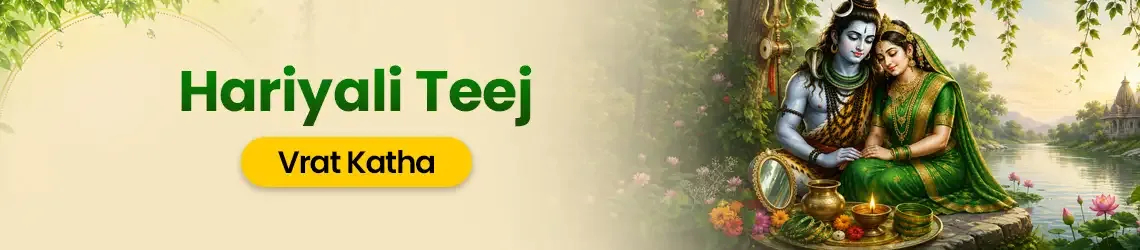
At the heart of every Hariyali Teej story is the timeless love between Lord Shiva and Goddess Parvati. Understanding it means going back even further, to Goddess Sati.
Goddess Sati was Lord Shiva's first wife. When her father insulted Lord Shiva in front of everyone, she could not bear the humiliation and gave up her life. Lord Shiva, heartbroken beyond words, withdrew from the world entirely and sank into deep, unbroken meditation.
According to legend, Goddess Sati was reborn as Goddess Parvati, daughter of Himavan, the king of the mountains. This time, something in her had already decided: she would marry no one but Lord Shiva.
That single decision, made in childhood, is where the real story of Hariyali Teej begins.
Part 2: Goddess Parvati's Long, Difficult Penance
This is the part of the tale that gives the festival its emotional weight. Goddess Parvati did not simply wish for Lord Shiva; she worked for him, year after year, through incredible hardship.
Legends describe her undertaking severe tapasya, living for long stretches on nothing more than dry leaves, sitting exposed through storms, hail, and biting cold, all while her devotion never wavered. Watching his daughter endure this, her father grew increasingly troubled. He wanted her comfort and happiness, not a life of austerity in the forest.
Then came an unexpected turn. The sage Narada arrived at the palace carrying a marriage proposal for Goddess Parvati, this time from Lord Vishnu himself. Her father was thrilled at the prospect of such a match. Goddess Parvati was devastated. Her heart, and her vow, belonged only to Lord Shiva.
Rather than go through with a marriage she never wanted, Goddess Parvati sought out a trusted friend for help and slipped away into a dense forest to hide. Her father sent soldiers in every direction to search for her, but she could not be found. Some tellings of the Hariyali Teej story say she remained hidden there for years, holding on to nothing but her faith.
Part 3: Lord Shiva Finally Accepts Her
Moved at last by the sheer weight of her devotion, Lord Shiva appeared before Goddess Parvati in the forest. He told her what she had waited so long to hear: he accepted her as his wife. He asked her to return and tell her father clearly that she would not marry Lord Vishnu, as her heart was already promised to someone else.
When Himavan learned the truth of his daughter's wish, he welcomed Lord Shiva and arranged their sacred wedding. Some versions of the story add a touching detail here: Lord Shiva reminded Goddess Parvati of the many lifetimes, said to number 107/108, that she had already spent trying to reach him so she would understand just how long her devotion had truly lasted. This divine union, believed to have taken place on the Tritiya of Shravan, is what Hariyali Teej commemorates every single year.
Hariyali Teej: Understanding the Legend and the Festival
The importance of the tale lies in its role in understanding Hariyali Teej.
Why Hariyali Teej Is Celebrated
Firstly, Hariyali Teej is a perfect example of a romantic tale coming to fruition despite all the hardships faced by both parties. The Shiva-Parvati wedding ceremony not only marks their happy reunion but also signifies a union between consciousness and energy, a concept essential in Hinduism. Henceforth, Parvati Devi is referred to as Teej Mata, an epitome of tolerance and internal fortitude.
Secondly, Hariyali Teej pays homage to married life. It signifies prayers made by married females for the well-being and longevity of their husbands. On the other hand, unmarried women pray on this particular day for finding someone like Shiva. Aspects highlighted include loyalty, commitment, and immense trust in the power of love.
Lastly, Hariyali Teej celebrates the arrival of the rainy season, honoring the abundance it brings. This festival highlights fertility, renewal of life, and prosperity through a good harvest period. Singing and dancing under tree swings (hindolas), wearing green garments, applying mehndi, and many other traditions all symbolize the essence of life during rainy days.
How the Story Translates to Customs and Traditions
Every aspect of Hariyali Teej is directly related to the legend above:
Teej (Hariyali) Vrat, the fast: Women observe a fast dedicated to Parvati Devi and seek blessings through their penance.
Puja and Vrat Katha: Puja is offered to Lord Shiva and Parvati Devi, while the Katha helps preserve the traditions of old times.
Hindolas: Decorated swings hung from trees illustrate the playful side of their relationship and the excitement of the rainy weather.
Conclusion
This legend of Hariyali Teej depicts the saga of enduring love that paid off beautifully. After years of penance, Parvati Devi won the heart of Lord Shiva, who eventually married her. This love union is celebrated through the revival of life after rains every year.
Swing amid rains or apply mehndi during Teej; both activities tell the same age-old legend about enduring patience, strong faith, and timeless love.