

Sawan Fasting Food: What to Eat and What to Avoid During Vrat
As devotees gear up for Sawan fasting, one common question comes up again and again: what is actually allowed during vrat, and what should be avoided? Fasting during Sawan isn't about starvation or surviving on plain fruit all day. It's about eating light, eating clean, and giving the body a gentle reset while the mind stays focused on Lord Shiva and spiritual practice.
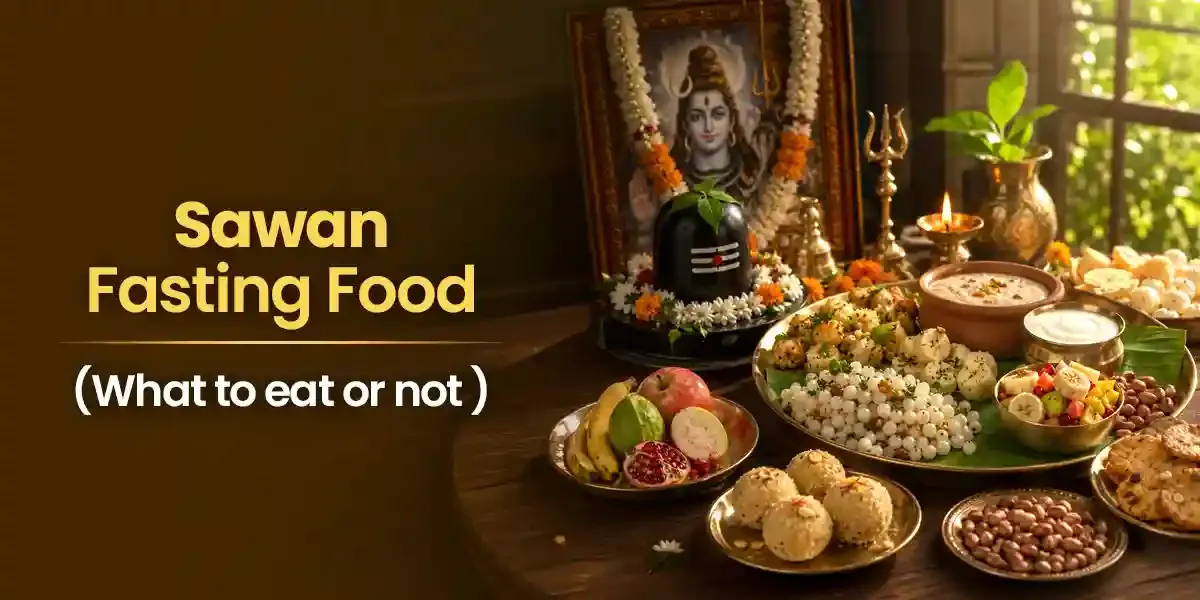
Sawan vrat works like hitting the pause button on the regular kitchen routine. Everyday staples get swapped for a special vrat pantry, and suddenly potatoes, sabudana, and makhana take center stage on the plate. Here's a complete breakdown of what belongs on a Sawan Somwar thali and what needs to stay off it.
Sawan Fasting Food: What Can Be Eaten
Here's a complete vrat pantry list for the month.
Vrat-friendly flours: Kuttu (buckwheat flour), singhara (water chestnut flour), and rajgira (amaranth flour) replace regular wheat flour. These flours are commonly used to make soft puris, parathas, and even thepla during the fast.
Grains and starches: Sabudana (tapioca pearls) and samak rice (also called mordhan or barnyard millet) form the backbone of most vrat meals. Both are filling without being heavy on the stomach.
Vrat vegetables: Potatoes, sweet potatoes, arbi (colocasia), bottle gourd, pumpkin, and raw banana are all permitted. These vegetables are versatile enough to be turned into curries, fries, or a simple sabzi.
Dairy products: Milk, curd, ghee, and paneer are fasting-friendly and add both nutrition and satisfaction to vrat meals.
Snacking staples: Fox nuts (makhana), peanuts, and assorted dry fruits are ideal for keeping hunger pangs at bay between meals.
Approved spices and seasoning: Regular table salt is not allowed, so sendha namak (rock salt) takes its place. Cumin, black pepper, green cardamom, cinnamon, cloves, fresh ginger, and green chilies are all used to keep vrat food flavorful.
What to Avoid During Sawan Vrat
The following foods don't make the cut during Sawan fasting.
Wheat flour, regular rice, lentils, and besan (gram flour) are strictly off the menu.
Onion and garlic are avoided completely, along with regular table salt.
Common spices like turmeric, mustard seeds, hing (asafoetida), and garam masala are skipped.
Packaged chips, fried namkeens, and non-vegetarian food have no place in a sattvic vrat diet.
The idea behind these restrictions is simple. Anything considered heavy, tamasic, or hard to digest is cut out, while food that is simple, fresh, and mindfully prepared takes its place.
Popular Sawan Vrat Recipes
Fasting food during Sawan doesn't have to be boring. A few classic dishes appear in almost every household during this month.
Sabudana khichdi: Soaked tapioca pearls tossed with cumin, green chilies, boiled potatoes, and roasted peanuts. This comforting, quick-to-make dish is one of the most popular vrat recipes across India.
Kuttu ki puri with aloo: Crispy buckwheat puris served alongside a mildly spiced potato curry. This combination remains a favorite on Sawan Monday in most homes.
Samak rice pulao: Barnyard millet cooked with a handful of allowed spices and vrat vegetables makes for a light yet satisfying main course.
Makhana kheer: Fox nuts roasted in milk, flavored with cardamom and garnished with a little dried fruit. It serves as a dessert that fits within the fast's guidelines.
Vrat ke pakode: Singhara flour pakore stuffed with potatoes or veggies; usually consumed as a late-evening snack during fasts.
Tips for Healthy Sawan Fasting
Proper fasting will make a huge difference in how you feel — either rejuvenated or exhausted. Here are some tips to keep in mind.
It is very important to stay hydrated throughout the day. High humidity levels during monsoons can easily make one dehydrated, which is why water, coconut water, and herbal beverages are recommended.
Another point to keep in mind while breaking the fast is how to do so. Suddenly eating lots of oil-based and heavy foods after spending the whole day fasting can shock your stomach, so it is better to break the fast slowly by starting with fruits or a glass of warm milk.
One more way to maintain a good energy level is to eat a handful of soaked almonds in the morning or roasted makhana at lunchtime.
Check All Sawan Fasting Dates
FAQs on Sawan Fasting Food
Can we eat chapati in Sawan fast?
Regular chapati made from wheat flour is not allowed during Sawan vrat. Wheat is on the restricted list, so puris or parathas made from kuttu, singhara, or rajgira flour are used instead.Can I drink coffee in fast Sawan?
The consumption of coffee is not advisable during fasting in Sawan, as it does not align with the principles of the sattvic diet and is a stimulant rather than a calming drink for the body. Milk heated with herbs or plain water can be used as a substitute during vrat.Can I drink chai during Sawan fast?
Chai made from tea leaves is usually not consumed during the vrat, as it is not sattvic. Instead, people opt for spices in milk or some herbal teas such as cardamom or tulsi water.How long does the fast last?
Typically from sunrise until sunset or after evening Shiva aarti, with one simple sattvik meal taken after dusk. Full dry fasting (no water) is optional and not mandatory for everyone.
In essence, foods for the Sawan fast are all about balance. They do not focus on depriving you of certain foods but rather on using ingredients that satisfy your spiritual needs while supporting digestion.
Team Astroyogi is an experienced in-house editorial team of passionate writers, researchers, and astrology enthusiasts dedicated to making ancient divination sciences more accessible and meaningful in everyday life. With years of collective experience in creating insightful astrology and spirituality content, the team specializes in simplifying complex spiritual concepts into practical guidance for readers seeking clarity, balance, and personal growth. The Astroyogi editorial team possesses expertise across a wide range of subjects, including Indian Astrology, Vedic Astrology, Planetary Transits, Horoscope Analysis, Vastu Shastra, Numerology, Tarot, Spiritual Wellness, and Ritual Practices. Every piece of content is carefully researched, fact-checked, and crafted with the intention of offering reliable, insightful, and easy-to-understand guidance rooted in traditional wisdom. Driven by a commitment to authenticity and reader trust, Team Astroyogi strives to create content that empowers individuals to navigate life’s opportunities and challenges with confidence, positivity, and inner peace. Their mission is to bridge ancient astrological knowledge with modern-day relevance, helping readers make informed decisions and lead more harmonious lives.