

Lord Shiva and His Family: Shiva, Parvati, Ganesha, Kartikeya and Nandi
When you think about Lord Shiva's family, you're looking at one of the most fascinating families in Hindu mythology. The stories of Lord Shiva with his family are filled with love, drama, cosmic battles, and lessons that still resonate today.
Let's uncover the lord shiva family tree and the legends that shaped Hindu mythology.
Meet the Head of the Family: Lord Shiva
Before we dive into the family tree, let's talk about the patriarch himself. Shiva isn't just another god. He's the destroyer in the Hindu trinity, the ultimate ascetic, and somehow also the ideal family man.
That contradiction is what makes him so intriguing. He lives on Mount Kailash, covers himself in ash, and wears a snake around his neck, and yet he's completely devoted to his family.
Shiva is known by 108 names: Mahadev, Bholenath, Neelkanth, and Nataraja. Each name represents different aspects of his personality. But when it comes to his role as a husband and father, he's surprisingly relatable.
He's the god who lost his temper when his wife wasn't invited to a ceremony, the father who gave his son an elephant head after accidentally beheading him, and the husband who carries the holy river Ganga in his matted locks because his wife asked him to.
Goddess Parvati: The Power Behind the Throne
Every great story about Lord Shiva and family starts with Parvati. She's the embodiment of divine feminine power. Without her, Shiva is incomplete. Hindu philosophy says Shiva without Shakti is shava (a corpse). That's how essential she is.
Parvati's story is one of determination. She was born as the daughter of the mountain king Himavan, and from childhood, she was devoted to Shiva.
But Shiva was deep in meditation, completely detached from worldly matters. So what did Parvati do? She performed intense penance to win his attention. We're talking years of standing on one leg, surviving on just leaves, and enduring extreme conditions, all to prove her dedication.
Lord Ganesha: The Beloved Elder Son
Now let's talk about family, starting with Lord Ganesha. His birth story is both tragic and fascinating, and it perfectly captures the chaotic love in this divine household.
According to legend, Parvati created Ganesha from the turmeric paste she used for bathing. She breathed life into this figure and asked him to guard the door while she bathed. When Shiva returned home and tried to enter, young Ganesha, being the loyal son, refused to let him pass. Shiva, not knowing this was his son, became furious, and, in the ensuing fight, beheaded the boy.
When Parvati emerged and saw what happened, her grief was so intense that the entire universe trembled. Shiva realized his mistake and promised to bring Ganesha back to life. He sent his followers to bring the head of the first creature they found facing north. They returned with an elephant's head, which Shiva placed on Ganesha's body, bringing him back to life.
This incident led to Ganesha becoming the remover of obstacles and the god of new beginnings. Every puja, every ceremony, every new venture in Hindu tradition begins with prayers to Ganesha.
He's also known for his wisdom, where he won a race against his brother not by speed but by cleverly circling his parents (since they represented his whole world).
Lord Kartikeya: The Warrior Son
The second son of Lord Shiva with his family setup is Kartikeya, also known as Murugan, Skanda, or Subrahmanya depending on which part of India you're in. If Ganesha represents wisdom and auspicious beginnings, Kartikeya embodies courage, strength, and warfare.
Kartikeya's birth itself was cosmic in nature. He was born specifically to defeat the demon Tarakasura, who had a boon that he could only be killed by Shiva's son. The gods needed a warrior powerful enough to lead their armies, and Kartikeya fit the bill perfectly.
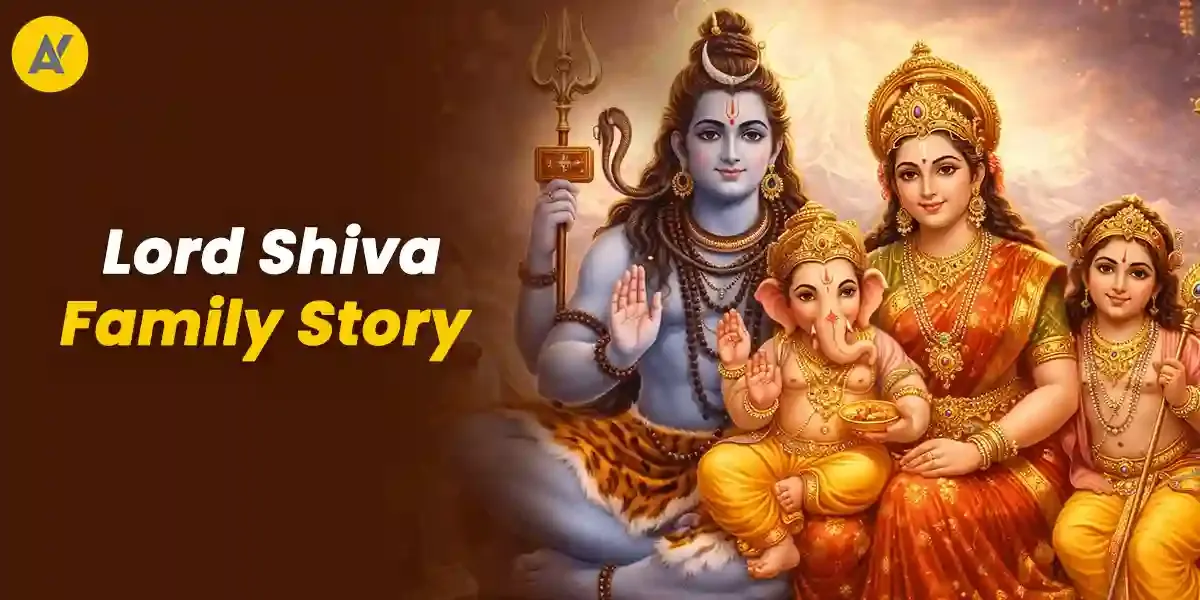
He's typically shown riding a peacock and holding a spear called Vel. In South India, especially Tamil Nadu, Kartikeya is hugely popular and has numerous temples dedicated to him. His relationship with his parents is different from Lord Ganesha. While Ganesha is somebody who loves his mother's cooking, Kartikeya is the independent warrior who sets out on his own adventures.
There's a famous story about both brothers competing for a divine mango. Ganesha won through cleverness, which upset Kartikeya so much that he left Mount Kailash and settled in South India. Even divine families have sibling rivalry, apparently.
Nandi: The Sacred Bull and Family Member
When we picture Lord Shiva and family, we can't forget Nandi, the sacred bull. Nandi isn't just Shiva's vahaan, but he's considered the gatekeeper of Kailash and Shiva's most devoted follower. In many temples, you'll find Nandi's statue positioned to eternally gaze at Shiva's idol, representing unwavering devotion.
Nandi is often included in family representations because his loyalty and service make him an integral part of the household.
He symbolizes dharma, strength, and dedication, the qualities that support the family structure.
The Shiva Parivar: Divine Power, Human Emotions
What makes the Lord Shiva family so relatable despite being gods? It's the very human emotions and situations they navigate. Shiva balances being a cosmic ascetic with being a present father. Parvati manages to be both a powerful goddess and a caring mother. Ganesha and Kartikeya have typical sibling relationships, which are love mixed with competition.
Navigate your own family’s unique blend of love and challenges with cosmic insight. To bring clarity and harmony to your home, talk to an astrologer on Astroyogi today
Why This Family Resonates Today
Even in modern times, the Lord Shiva family remains incredibly relevant. We see ourselves in their stories, the working parent trying to balance spiritual growth with family duties (Shiva), the multitasking partner who manages everything (Parvati), the smart child who thinks outside the box (Ganesha), and the ambitious one who wants to prove themselves (Kartikeya).
Hindu households often keep images or idols of Lord Shiva and family together, symbolizing that when the divine family is complete and harmonious, blessings flow naturally. The family unit, despite individual powers and personalities, works best when together.
From the snow-capped peaks of Kailash to temples across the world, the stories of this divine family continue to inspire, teach, and remind us that even gods value family bonds above all else.
Team Astroyogi is an experienced in-house editorial team of passionate writers, researchers, and astrology enthusiasts dedicated to making ancient divination sciences more accessible and meaningful in everyday life. With years of collective experience in creating insightful astrology and spirituality content, the team specializes in simplifying complex spiritual concepts into practical guidance for readers seeking clarity, balance, and personal growth. The Astroyogi editorial team possesses expertise across a wide range of subjects, including Indian Astrology, Vedic Astrology, Planetary Transits, Horoscope Analysis, Vastu Shastra, Numerology, Tarot, Spiritual Wellness, and Ritual Practices. Every piece of content is carefully researched, fact-checked, and crafted with the intention of offering reliable, insightful, and easy-to-understand guidance rooted in traditional wisdom. Driven by a commitment to authenticity and reader trust, Team Astroyogi strives to create content that empowers individuals to navigate life’s opportunities and challenges with confidence, positivity, and inner peace. Their mission is to bridge ancient astrological knowledge with modern-day relevance, helping readers make informed decisions and lead more harmonious lives.