
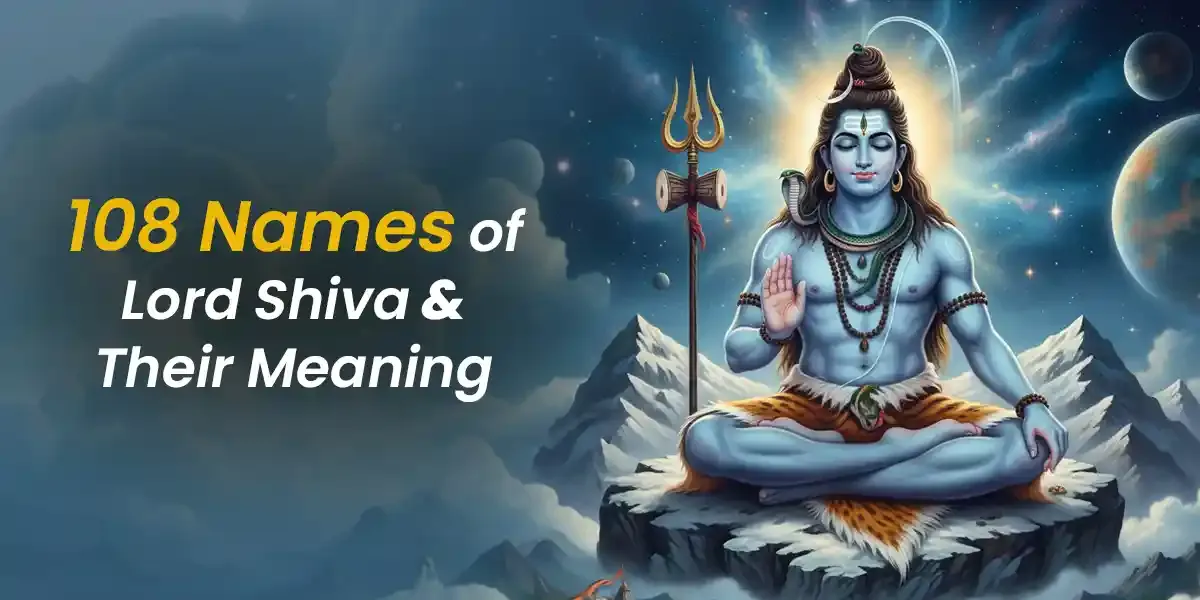

108 Names of Lord Shiva: Their Meanings, Benefits and Chanting Guide
Have you ever wondered what the real power of the 108 names of Lord Shiva is? Every name has its own special vibration, leading you to peace, power, and spiritual enlightenment.
Named Mahadev, Bholenath, and Shankar, Shiva is protection, transformation, and divine wisdom. Reciting the 108 names of Shiva is not just a ritual; it's an act of moving out of negativity, enhancing concentration, and waking up your inner being.
Whether you chant the Shiv 108 name in meditation or take out time on Mondays and Mahashivratri, with every sacred sound, you connect to the universal energy of Mahadev.
Go through the entire list, feel the divine presence, and open your life to positivity, courage, and balance today!
Need any astrological help? Talk to Astroyogi's top astrologers online now – Call or Chat right away for guidance!
The 108 Different Names of Lord Shiva and What Do They Mean
- Shiv – The extremely auspicious one
- Maheshwar – The God of gods
- Shambhu – The embodiment of bliss
- Pinaki – One who holds the sacred bow named Pinaka
- Shashi Shekhar – The one who wears the moon on his head
- Vamadeva – The one who is extremely beautiful in form
- Virupaksha – The one who has a unique eye on his forehead
- Kapardi – One who wears matted hair
- Nilalohit – The Lord who is in blue and red colored form
- Shankar – The one who bestows happiness and prosperity
- Shoolpani – One who holds a trident in his hand
- Khatvangi – The lord who carries a club-like weapon called Khatvaṅga
- Vishnuvallabha – Very dear to Lord Vishnu
- Shipivishta – The one who emits specific rays from their form
- Ambikanath – Husband of Goddess Bhagwati (Goddess Parvati)
- Shrikanth – The one with a beautiful throat
- Bhaktavatsal – One who shows immense love to his devotees
- Bhava – The one who appears as the world
- Sharva – Destroyer of sufferings
- Trilokesh – One of the 108 names of Lord Shiva, who rules the three worlds
- Shitikantha – The one with a white-throat
- Shivapriya – Beloved of Parvati
- Fierce – One who is extremely fierce
- Kapali – The one who wears the skull
- Kamari – Enemy of Kamadeva, and vanquisher of darkness
- Sursudan – The slayer of the demon Andhaka
- Gangadhar – The Lord who holds Goddess Ganga in his matted hair
- Lalataaksha – The deity who wears eyes on his forehead
- Mahakaal – The one who rules all dimensions of time: past, present, and future
- Kripanidhi – The one who is an ocean of mercy and compassion
- Bheem – Who is as strong as Bhima and has a fearsome appearance
- Parashuhasta - One of Mahadev's 108 names, who holds an axe in his hand
- Mrigpani – The one who holds the deer in his hands in the form of the minds of his devotees
- Jatadhar – The one who has matted hair
- Kailasavasi – The Lord who resides on Mount Kailash
- Kavachi – The one who wears armor
- Kathor – The one with a strong body and is very powerful
- Tripurantaka – One of the 108 names of Shiva who killed Tripurasura
- Vrishank – One whose flag bears the symbol of Nandi (the sacred Bull)
- Vrishabharudha – The one who rides on Nandi, the Bull
- Bhasmoddhulitavigrahaya – The one who wears ashes all over his body
- Samapriya – The one who is very fond of the Samaveda (the holy text of chants and melodies)
- Swaramayi – Shiv’s 108 names for the one who resides in the seven notes
- Trayimurti – The one who possesses the Veda form: Rigveda, Yajurveda, and Samaveda
- Aneesshwara – The one who doesn’t have any Lord and is the master of himself
- Sarvagya – The omniscient; he who knows everything
- Paramatma – The highest of all beings; he who is the Supreme God
- Somasuryagnilochan – The deity who holds the moon, sun, and fire as His three eyes
- Havishe – The one who is the embodiment of Haavi (sacrifice)
- Yajnamay – He who is in the form of yagya (sacrificial rites)
- Som – With the form of Uma (Parvati), the one who is as cool and pure as the moon
- Panchavaktra – The one with five faces
- Sadashiv – One of the 108 names of Shiva, who is eternally auspicious
- Vishweshwara - Lord of the entire universe
- Veerabhadra: The fearsome and powerful warrior, yet calm and peaceful
- Gananath – He who is the master of all Ganas: Gods, humans, and demons
- Prajapati – The protector; the master of all living beings
- Hiranyareta – The one who possesses the brilliance of a thousand suns
- Durdhursh – The one who cannot be conquered or defeated
- Girish – The lord of the mountains
- Girishwar – The one who sleeps on Mount Kailash
- Anaghya – The one who is pure and free from sins
- Bhujangbhushan – The one who wears snakes as ornaments
- Bharga – The one who destroys all sins
- Giridhanva – The one who holds Mount Meru as his bow
- Giripriya – Those who love mountains very much
- Krittivasa – The one who wears elephant skin as his clothes
- Purarati – Destroyer of the demon Tripurasura and his three worlds
- Bhagwan – One of Mahadev’s 108 names that means the Supreme Lord of prosperity
- Pramathadhipa – The one who rules the Pramathganas, i.e., the Shivaganas or the divine guardians of Lord Shiva
- Mrityunjaya – The one who conquers death
- Sukshmatanu – The one who has a subtle body
- Jagadvyaapi – The Lord who is present in the entire universe
- Jagadguru – The Guru of the world
- Vyomkesh – The one whose hair covers the whole sky
- Mahasenjanaka – The father of Lord Kartikeya
- Charuvikrama – The one who is beautiful and valorous
- Rudra – The fierce form of Shiva
- Bhootpati – The lord of ghosts or the five elements
- Sthanu – The one who is immovable and eternal
- Ahirbudhnya – The one who holds the Kundalini
- Digambara – One of the 108 names of Lord Shiva who wears the cosmos as a garment
- Ashtamurti – The lord with eight forms
- Anekatma – The Lord who takes many forms
- Sattvik – Having the quality of purity and goodness
- Shuddhavigrah – One who has a pure soul
- Shashvat – The Lord who is eternal and indestructible
- Khandaparshu - One of Mahadev’s 108 names, who holds a broken axe
- Aja – The one who is eternal and boundless
- Pashavimochana - The one who frees us all from worldly bondages
- Mrida – The Lord who bestows happiness
- Pashupati - The lord of the animals
- Dev – The supreme deity whom we all worship
- Mahadev – The Lord of all gods
- Avyaya – The Lord who is indestructible or imperishable
- Hari – One with the form of Vishnu
- Pushadantbhit – The one who uprooted Pusha's teeth
- Avyagraya – One who is never distressed and is stable and unwavering in nature
- Dakshadhvaraharaya – The one who destroyed Daksha Prajapati's sacrifice
- Hara – The destroyer of sins and sufferings
- Bhagnetrabhid – The one who plucked out the eye of the deity Bhaga
- Avyaktaya – The one who is invisible to the senses
- Sahasraaksha – The lord with a thousand eyes
- Sahasrapada – The deity with a thousand feet
- Apavargaprada – The one who bestows Moksha or liberation
- Ananta – He who is infinite, that is, having many forms
- Tarak – The one who offers salvation to all
- Parameshvar – The Supreme God
Do give this a quick read: What is Shivaling?
What are the Benefits of Chanting the 108 Names of Lord Shiva?
Chanting Lord Shiva’s 108 names goes beyond a spiritual ritual – it has a profound effect on inner awakening, strength, and peace. These 108 names of Shiva have many forms, qualities, and divine energies that point us toward balance, wisdom, and freedom.
Each name of Mahadev brings a sacred vibration to clean the mind, purify the heart, and lift the soul. To recite the Shiv 108 names often can help to remove negativity, wake up self-awareness, and create inner balance.
Devotees believe that reciting these names, especially on Mondays or during Mahashivratri, pleases Lord Shiva. This chanting not only alleviates suffering but also calms the mind.
Here are some key benefits of saying the 108 names of Lord Shiva:
- Removes negative energy and brings mental calmness.
- Enhances focus, discipline, and inner strength.
- Inspires courage to overcome fear and challenges.
- Promotes healing, physically, emotionally, and spiritually.
- Encourages self-awareness and detachment from material worries.
- Purifies karma and brings peace to the soul.
- Attracts spiritual wisdom and divine protection.
When you chant the Mahadev 108 name, you connect with Lord Shiva’s universal energy, the energy that destroys ignorance and awakens the inner truth.
How to Chant the 108 Names of Shiva?
You can make the 108 names of Lord Shiva part of your everyday spiritual routine. This practice needs dedication, regularity, and a peaceful mindset.
Here's how to start:
Chant: Say the Shiv Ji 108 names at dawn or while you meditate. A Rudraksha mala, especially the 108-bead Rudraksha mala, can help you keep track as you speak each name with attention and respect.
Meditate: Each day, think about one of the 108 names of Lord Shiva and what it means. Let its power shape your thoughts and actions for the day.
Intention: Before you begin, decide on a pure goal – to find peace, healing, or divine guidance. Lord Shiva's power responds to sincere devotion, not perfection.
Sending astrology gifts is now easy with Astroyogi Mall. Give your loved ones a special gift filled with positive energy! Check out our Yogii Mall now and make them feel special!
To Conclude
Chanting the 108 names of Lord Shiva has an impact on both worldly and spiritual growth. It cleanses the soul, boosts mindfulness, and brings calm and power to life.
Each 108 names of Shiva show a side of Mahadev – the one who destroys, protects, and liberates. These holy sounds bring clarity, kindness, and bravery into our everyday lives.
When you say the Mahadev 108 names with love, you call his godly presence with each breath – melting away fear, bringing back peace, and waking up a higher state of mind.
Shiva's 108 names are more than just words; they open doors to change within, wisdom, and a link to the divine. Say them with trust, and feel Shiv Ji's blessing flow through your life as peace, strength, and joy.
Talk to Astrologers
View All



Team Astroyogi is an experienced in-house editorial team of passionate writers, researchers, and astrology enthusiasts dedicated to making ancient divination sciences more accessible and meaningful in everyday life. With years of collective experience in creating insightful astrology and spirituality content, the team specializes in simplifying complex spiritual concepts into practical guidance for readers seeking clarity, balance, and personal growth. The Astroyogi editorial team possesses expertise across a wide range of subjects, including Indian Astrology, Vedic Astrology, Planetary Transits, Horoscope Analysis, Vastu Shastra, Numerology, Tarot, Spiritual Wellness, and Ritual Practices. Every piece of content is carefully researched, fact-checked, and crafted with the intention of offering reliable, insightful, and easy-to-understand guidance rooted in traditional wisdom. Driven by a commitment to authenticity and reader trust, Team Astroyogi strives to create content that empowers individuals to navigate life’s opportunities and challenges with confidence, positivity, and inner peace. Their mission is to bridge ancient astrological knowledge with modern-day relevance, helping readers make informed decisions and lead more harmonious lives.