

What to Buy on Dhanteras 2026: Auspicious Things to Bring Home
Glowing diyas, freshly cleaned homes, and the promise of a new beginning: Dhanteras opens the five-day Diwali festival. It is associated with Goddess Lakshmi, Lord Kubera, and Lord Dhanvantari, the deities of health. Families traditionally mark the day by buying gold, silver, utensils, puja items, and useful things for the home.
This guide covers the date and buying time, the most auspicious purchases, answers to common questions about cars, laptops, and property, and what to avoid. You don't need to spend a lot. Intention and usefulness matter more than price.
Dhanteras 2026: Date and Best Time to Buy
Mark your calendar and plan your festive shopping with the key dates and most auspicious timings for Dhanteras 2026 detailed below.
| Detail | Dhanteras 2026 |
|---|---|
| Date | Friday, November 6, 2026 |
| Trayodashi Tithi | Begins November 6 and ends November 7; exact time varies by location. |
| Pradosh Kaal | Evening period, generally after sunset. |
| Dhanteras Puja Muhurat | Usually around 5:30 PM to 8:15 PM, depending on the city and panchang. |
| Best Time to Buy | Afternoon or evening muhurat; confirm local timing. |
Dhanteras is observed on November 6, even though the Trayodashi tithi runs into November 7. Muhurat timings differ from city to city, so check a local panchang before you plan your puja or a major purchase.
Many families prefer to buy gold or silver during the afternoon or evening muhurat. If you miss the window, don't worry. A thoughtful purchase made with devotion is still meaningful.
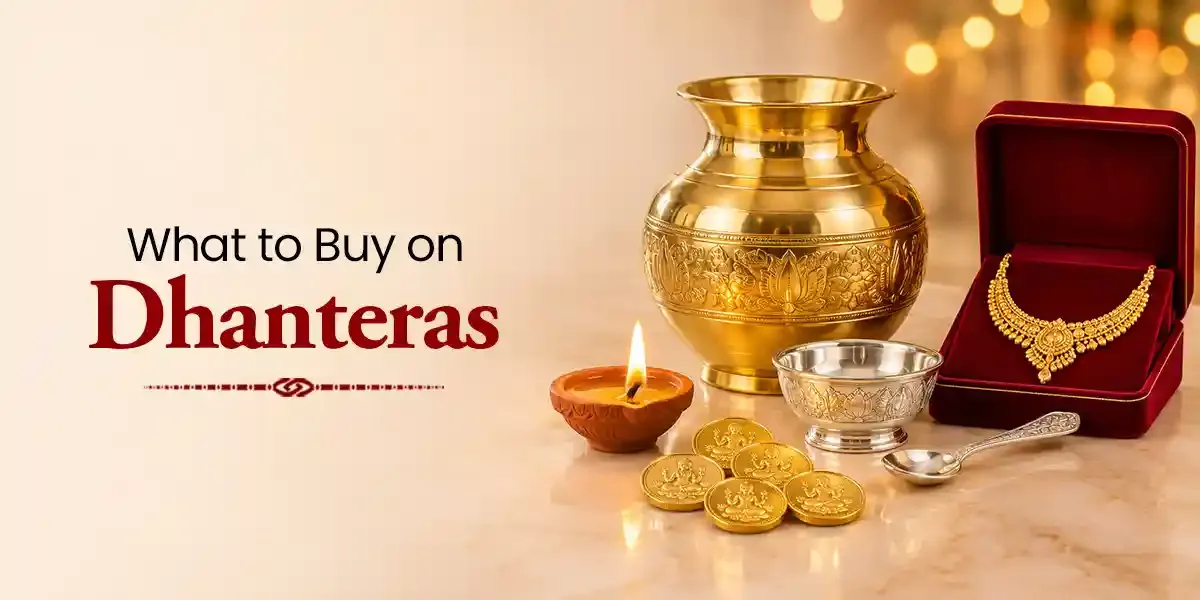
What to Buy on Dhanteras: Quick List
- Gold or silver
- Gold or silver coins
- Utensils and kitchenware
- Lakshmi-Ganesha or Dhanvantari idols
- Diyas, incense, and puja items
- Gomti Chakra, Kuber Yantra, or Shree Yantra
- Electronics and appliances
- Home décor and useful household items
- A new broom, according to family tradition
- Salt or coriander seeds, according to regional custom
Choose items that are useful, within budget, and meaningful to your family, not simply expensive.
Gold, Silver, and Coins
Gold and silver are the most traditional Dhanteras purchases. They symbolize prosperity, security, and the blessings of Goddess Lakshmi, which is why buying gold on Dhanteras remains such a popular custom. Common choices include gold coins, silver coins, jewelry, silver utensils, and Lakshmi-Ganesha coins.
The purchase doesn't need to be large. Even a small silver coin is considered auspicious, and silver is a good option if gold is out of budget. Many people buy a Dhanteras gold coin or silver coin for both puja and as a long-term saving.
A few practical tips:
- Buy from a trusted jeweler.
- Check the hallmarking.
- Compare making charges across shops.
- Keep the invoice safe.
Utensils, Copper, Steel, and Kitchen Items
New utensils are one of the oldest Dhanteras traditions. They symbolize nourishment, abundance, and a well-provisioned home. Copper, brass, bronze, and steel are all common choices. Popular picks include water pots, serving bowls, storage containers, puja vessels, and cookware.
On iron versus steel: items made mainly of iron are often avoided in tradition, while steel utensils are widely considered acceptable. If in doubt, follow your family's custom.
One practical tip: choose utensils you will actually use. A vessel that serves your kitchen for years carries more value than one bought only for ritual.
Puja Items and Spiritual Décor
Lakshmi-Ganesha idols, Dhanvantari idols, diyas, incense holders, puja thalis, and sacred yantras are central to Dhanteras and Diwali worship. They give the home a focal point for prayer and the festive puja.
Some families also bring home a Shree Yantra or Kuber Yantra for their worship space. Gomti Chakra is another popular item. Traditions vary on how to use it, and many people prefer an odd number or a set chosen with devotion rather than following one fixed rule.
Salt, Broom, Coriander Seeds, and Other Traditional Items
If this is part of your family tradition, these small purchases carry real meaning.
Salt: Many households buy salt on Dhanteras as a symbol of purity and prosperity. Customs vary by region.
Coriander seeds: Some families buy coriander seeds and keep them at home or use them in puja-related traditions.
Broom: A new broom is associated with cleanliness and sweeping away negativity. Some families buy it on Dhanteras and begin using it after Lakshmi Puja.
Caring for the broom: Keep it clean, store it respectfully, and use it for the home. Avoid treating it casually.
What Not to Buy on Dhanteras
- Knives, scissors, needles, and other sharp objects
- Items made mainly of iron
- Black-colored goods, according to some traditions
- Easily breakable glassware
- Plastic items, according to some customs
These beliefs vary across regions and families. They are traditional customs, not universal rules. If your household needs an essential item, practical need can take priority.
Dhanteras Shopping Tips for 2026
- Set a budget before you shop.
- Prioritise useful purchases over impulse buys.
- Check hallmarking on gold and silver.
- For electronics, compare Diwali offers, warranties, delivery timelines, and return policies.
- If shopping online, order early so delivery arrives before Diwali.
- Keep bills, warranties, and certificates safe.
- Avoid debt-driven purchases. Prosperity is also about financial balance.
Conclusion
Dhanteras is about welcoming health, prosperity, and positivity into your home. A gold coin, a copper vessel, a new appliance, or a simple diya can all be meaningful when chosen with care. Shop consciously and within your means. May Goddess Lakshmi bless you with abundance, may Lord Dhanvantari grant you good health, and may your home be filled with happiness.
Team Astroyogi is an experienced in-house editorial team of passionate writers, researchers, and astrology enthusiasts dedicated to making ancient divination sciences more accessible and meaningful in everyday life. With years of collective experience in creating insightful astrology and spirituality content, the team specializes in simplifying complex spiritual concepts into practical guidance for readers seeking clarity, balance, and personal growth. The Astroyogi editorial team possesses expertise across a wide range of subjects, including Indian Astrology, Vedic Astrology, Planetary Transits, Horoscope Analysis, Vastu Shastra, Numerology, Tarot, Spiritual Wellness, and Ritual Practices. Every piece of content is carefully researched, fact-checked, and crafted with the intention of offering reliable, insightful, and easy-to-understand guidance rooted in traditional wisdom. Driven by a commitment to authenticity and reader trust, Team Astroyogi strives to create content that empowers individuals to navigate life’s opportunities and challenges with confidence, positivity, and inner peace. Their mission is to bridge ancient astrological knowledge with modern-day relevance, helping readers make informed decisions and lead more harmonious lives.